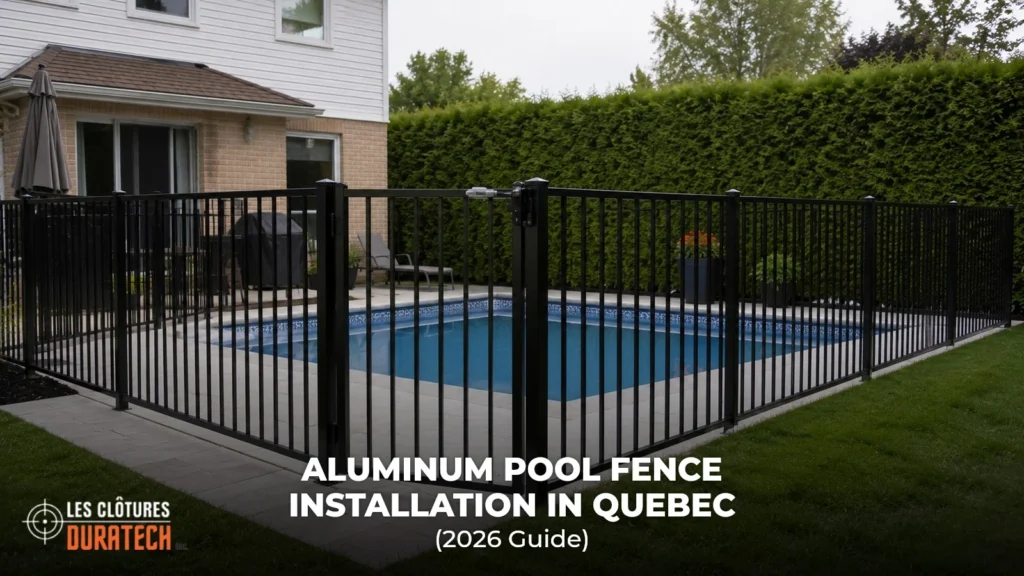


Pool fence gates are often the weakest point in a backyard safety barrier. Even if your fence meets all Quebec pool fence requirements, a non-compliant gate latch or a gate that stays open can undermine the entire setup.
With the final deadline for Quebec’s residential pool safety framework approaching on September 30, 2027 (affecting all pools, even those built before 2010), owners often ask practical questions: how high must the latch be, does the gate need to close automatically, and what habits reduce risk?
This guide explains Quebec pool gate requirements simply, based on the official Québec government guidance and the Residential Swimming Pool Safety Regulation. It covers latch position, self-closing hardware, common mistakes, inspection points, and safety tips to keep your South Shore enclosure functioning correctly.
Pool Fence Gate Latch Requirements in Quebec
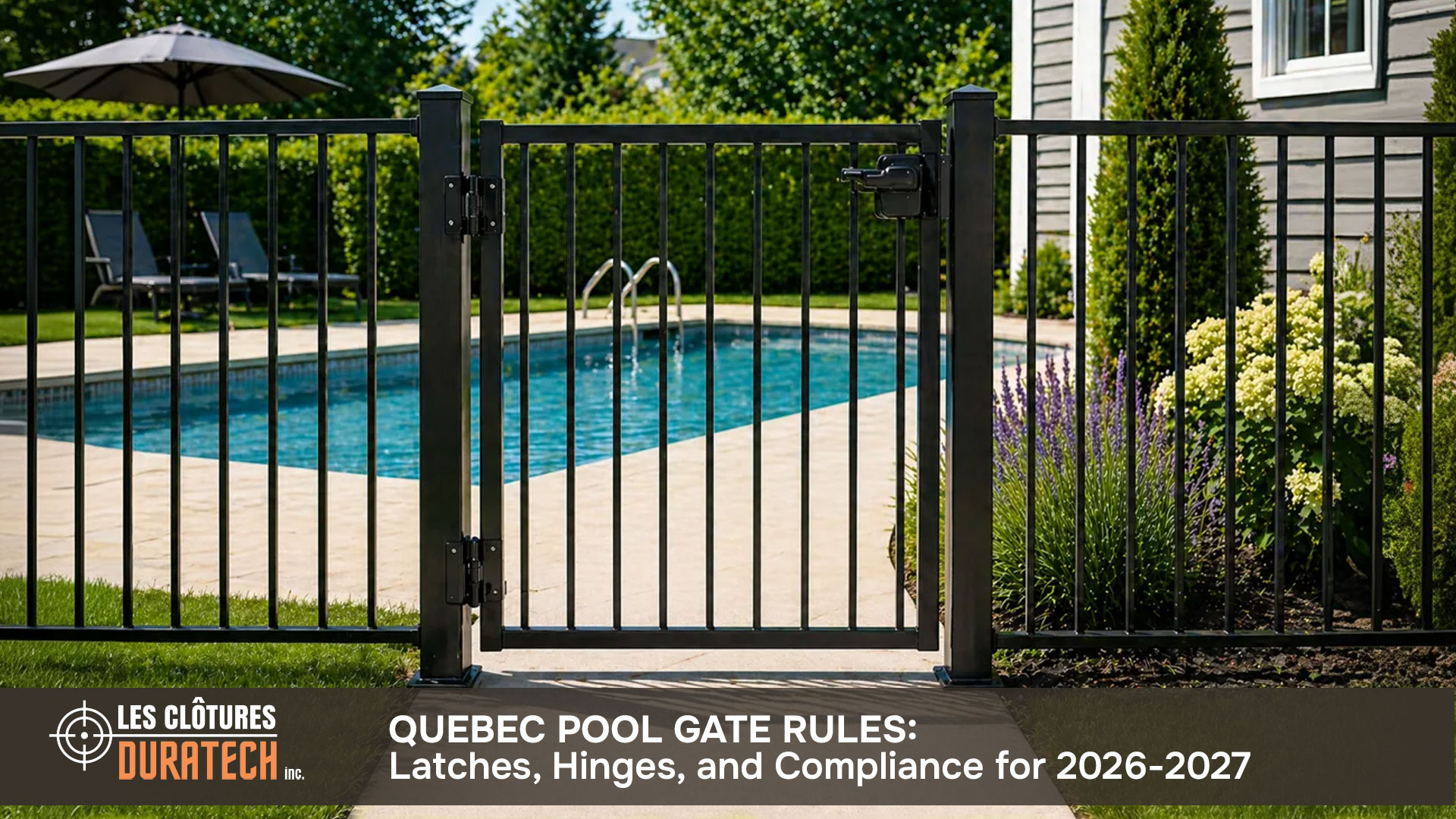
A pool fence gate latch's main job is preventing unsupervised access, especially by children. The gate must be equipped with a self-closing and self-latching passive security device.
Quebec's pool safety rules focus on reducing drowning risks by limiting unsupervised entry from the yard to the water. A compliant gate is one of the most important parts of a safe pool enclosure.
Latch Position Requirements
Quebec law is extremely specific about where the latch can be placed to prevent a child from opening the gate. You have two legal options for installation:
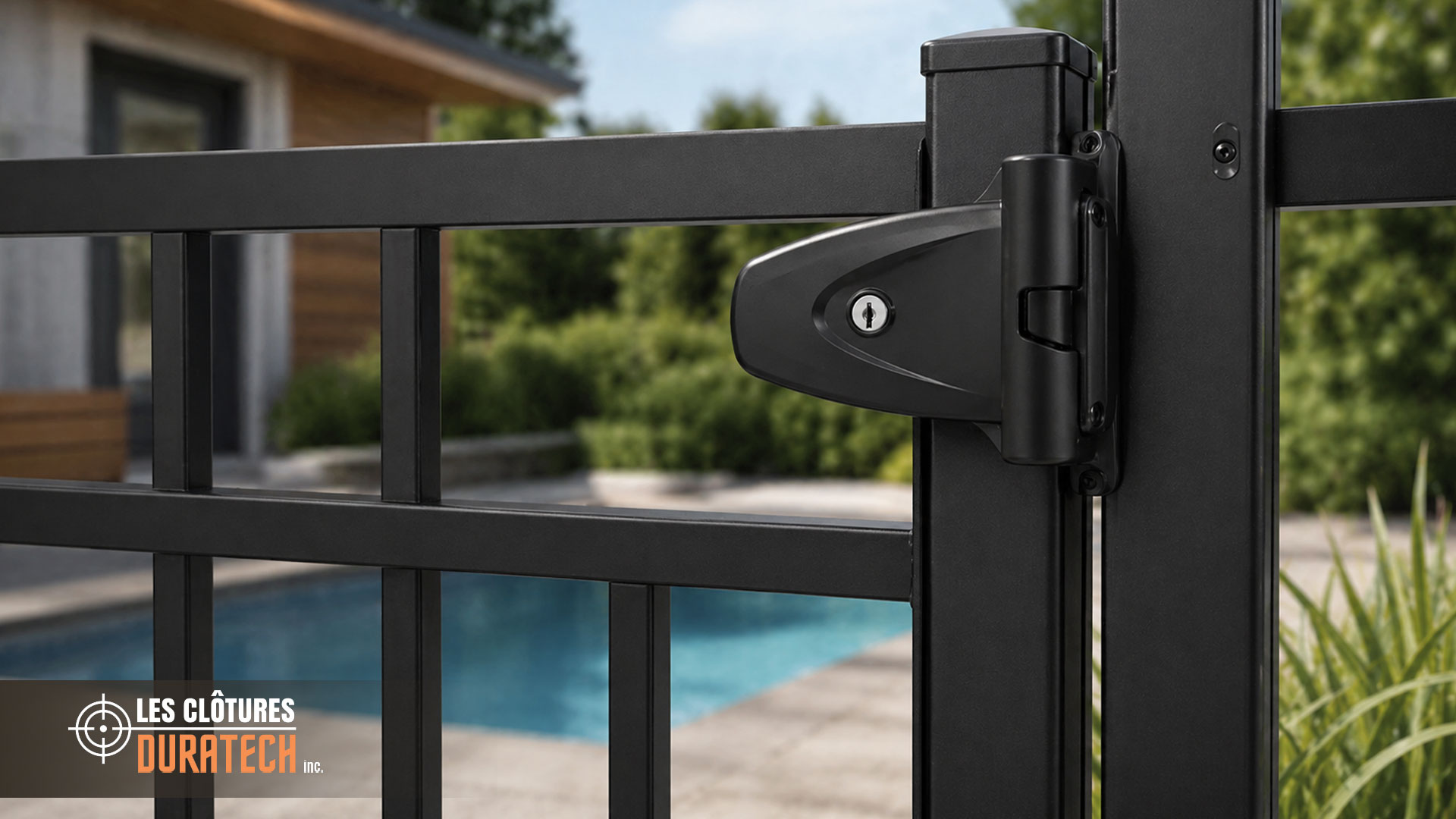
- Option 1 (Inside): The latch can be installed on the inside of the enclosure, in the upper part of the gate.
- Option 2 (Outside at 1.5m): If the latch is installed on the outside of the gate, it must be installed at a minimum height of 1.5 meters (59 inches) from the ground.
The "Reach-Through" Rule for Adjacent Fencing
If you choose to install the latch on the inside of the gate, the fence panels immediately adjacent to the latch must also meet strict safety standards. If the latch is installed inside the enclosure, nearby fence design must also prevent a child from reaching or operating the release through the barrier.
- The gaps between vertical pickets (like on Ornamental fences) cannot exceed 10 cm (4 inches).
- If you have a chain-link (Frost) fence, the mesh openings must be exceptionally small (maximum 30 mm) to prevent a child from using the fence to climb up or reach the latch. (This is why Duratech highly recommends Ornamental Aluminum or Steel over frost for pool gates – it naturally prevents reaching and climbing without needing special mesh sizes).
Child-Resistant Locking Features
Simple hooks or weak hardware are not appropriate for a compliant pool gate. Hardware must resist easy manipulation, engage reliably after each closure, and remain functional despite repeated use, weather, and minor ground movement.
Duratech Pro Tip: We highly recommend Magnetic Latches (like MagnaLatch) over mechanical metal strikes. Magnets pull the locking pin into place instantly and don't rust or jam over time.
| Aspect | Writing Evaluation | Speaking Evaluation |
| Task focus | Format, structure, register | Interaction, spontaneity, adaptation |
| Planning time | Longer, you can draft and revise | Short prep, performance is live |
| Error tolerance | Slightly stricter on grammar and spelling | More tolerant if communication is clear |
| Key success factor | Organized, complete response | Fluency and ability to keep communication flowing |
Self-Closing Gate Hinges
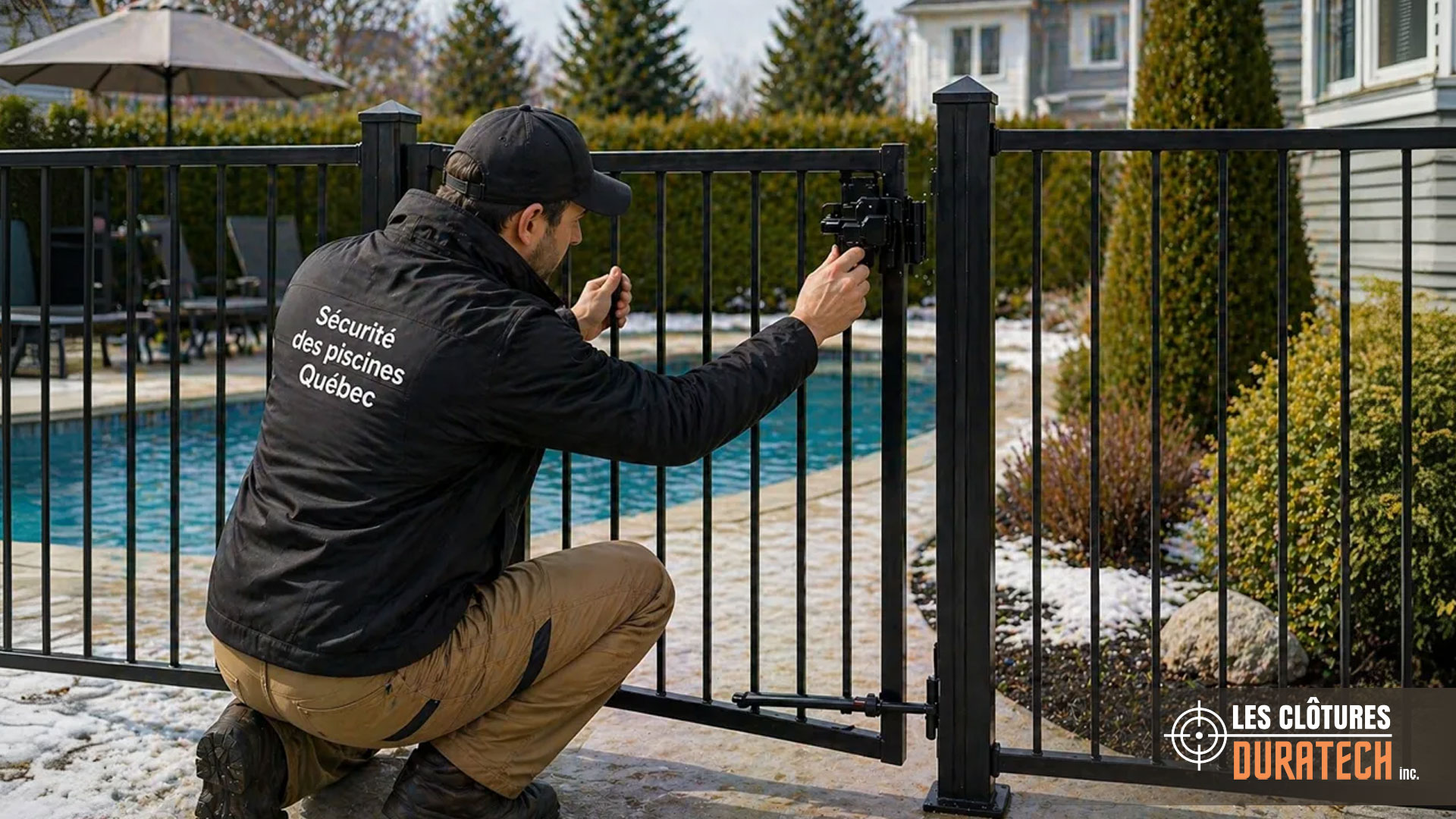
A self-closing gate hinge is crucial. Quebec rules strictly require access gates to close and lock automatically. The gate cannot rely on someone remembering to pull it shut. This addresses a common risk: adults accidentally leaving gates partly open during backyard gatherings.
Spring Hinge Performance
Spring-loaded polymer or metal hinges are common on pool gates. They need proper tension adjustment so the gate closes fully from various angles, including small openings (the "creep test") that often reveal installation issues.
Hydraulic Closer Options
Some premium gates use controlled hydraulic closing devices. These systems offer smoother, slam-free operation but must provide enough force to ensure the latch engages fully, even with wind or normal wear.
Test your gate: Open it slightly (1 inch), then halfway, then fully. Observe if it closes and latches each time. If it fails in any position, the hinges need adjustment.
What Inspectors Check
Inspectors typically focus on a few practical points that determine whether a gate is truly safe in daily use. A compliant gate should close and latch on its own from different opening angles, and the latch should not be reachable from outside the enclosure. They will also look for post movement, hinge wear, rust, or anything that prevents the gate from shutting cleanly after winter.
- The gate closes fully on its own.
- The latch engages every time.
- The release cannot be reached from outside.
- The gate does not drag, stick, or bounce open.
- Nearby objects do not create a climbing aid or block the closing path.
Pool Safety Regulations and Gate Functionality
Quebec pool safety regulations consider how the access point functions as a whole. The intent is that the enclosure forms a continuous obstacle.
Gate Swing Direction (Safety Best Practice)
The provincial regulation clearly requires self-closing and self-latching gate hardware. In practice, many installers prefer outward-swinging gates because they are easier to secure and reduce the chance of accidental push-through. At Les Clôtures Duratech, we highly recommend installing pool gates so they open outward (away from the pool).
- The Safety Logic: If a child pushes their weight against an outward-swinging gate that didn't latch properly, their body weight will simply push the gate closed. If it opens inward, leaning on it could push it wide open, granting direct access to the water.
Clearance and gap control
Ground clearance and side gaps near the latch must stay within limits (usually preventing the passage of a 10 cm sphere). Frost heave, settlement, and post movement can enlarge openings over time, a common compliance issue.
| Inspection point | Frequent problem | Safety impact |
| Bottom clearance | Soil settlement or erosion | Child can crawl under or the gate drags and stays open. |
| Latch alignment | Post movement from frost heave | Gate swings closed but the latch misses the strike plate. |
| Hinge tension | Wear, rust, or poor adjustment | Gate stays ajar or swings too weakly to lock. |
Pool Gate Maintenance and Compliance in Quebec
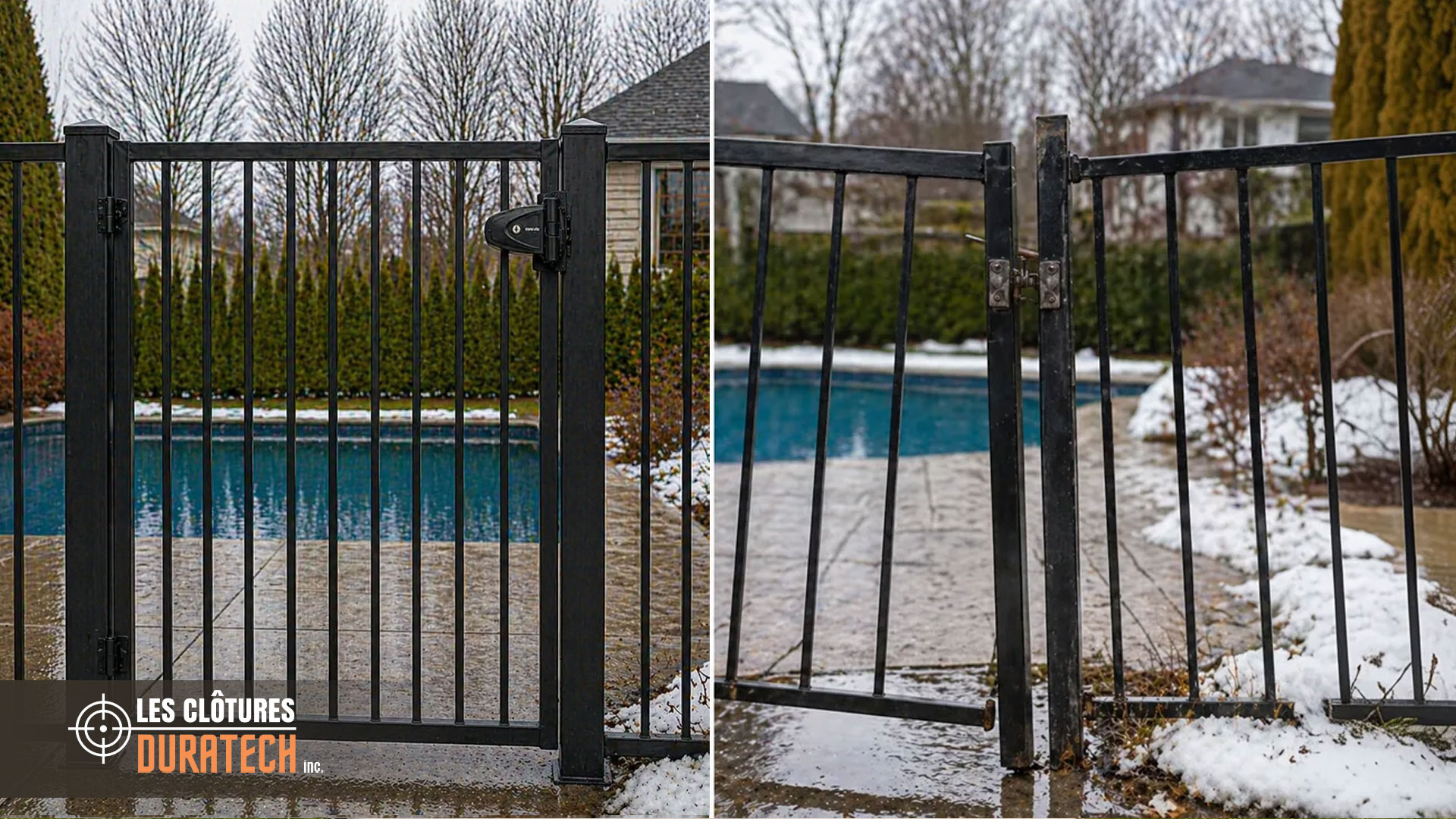
Pool gate compliance depends on maintenance as much as installation. Quebec’s severe freeze-thaw cycles cause ground movement that drastically affects hinges, posts, and latch alignment.
A gate that passed inspection years ago may no longer function correctly. Les Clôtures Duratech combats this by using Ornamental Aluminum or Steel Fences for pools (aluminum is low-maintenance and corrosion-resistant, which makes it a strong choice for pool enclosures) and following a 14-day concrete curing period for our posts to prevent the frost heave that misaligns gates. Proper post setting and adequate curing time are essential to reduce the risk of future misalignment.
Seasonal Checklist
- Spring: Test every gate after the frost leaves the ground. Frost heave is one of the most common reasons gate posts shift out of alignment in Quebec.
- Summer: Check for loose fasteners on metal frames and test hinge tension.
- Fall: Clear leaves and debris that might prevent full closure at the bottom of the gate.
Common owner mistakes
A frequent mistake is propping the gate open during gatherings. Another is attaching decor or privacy material that interferes with the closer or creates footholds near the latch.
2 Real Compliance Cases on the South Shore:
- Case 1 – Latch too accessible (St-Hubert): A pool gate’s release was easily reachable from the outside through a large chain-link mesh. Correction involved adding a clear acrylic shield around the latch area and repositioning the mechanism to ensure strict child resistance.
- Case 2 – Gate stopped self-latching after Winter (St-Jean-sur-Richelieu): Frost movement shifted a shallowly dug post, causing the gate to require manual force to latch. The issue was resolved by extracting the post, drilling deeper below the frost line, pouring new concrete, and realigning the hardware.
Pool Fence Inspection Best Practices in Quebec
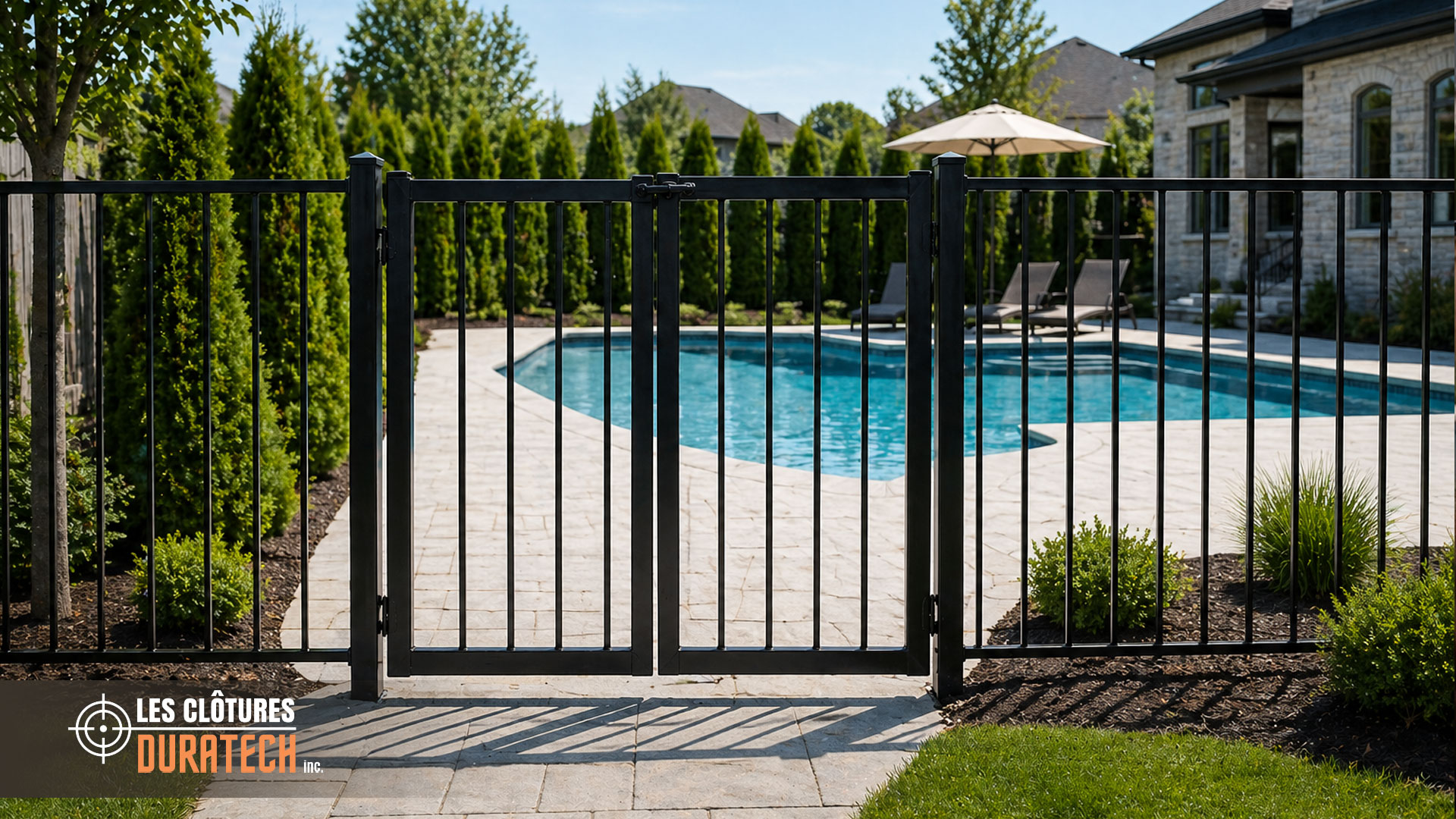
A pool fence inspection must include the gate. Gates have moving parts, making them prone to failure.
A simple monthly check can catch many issues before an inspector or a tragedy does.
- Open the gate slightly and release it; repeat from a wider opening.
- Confirm the latch engages fully.
- Check that the release is inaccessible from outside.
- Ensure no nearby objects (chairs, coolers) can be used to climb or manipulate the hardware.
- Look for scraping, slow closing, bouncing off the latch, rust, loose screws, or misalignment. These signs indicate the system is degrading.
Extra Household Safety Tips
Do not store items beside the enclosure. Teach children the gate is not a play feature. During gatherings, never prop the gate open with a rock or chair – this is a severe violation of safety laws.
FAQ
1. Does a pool gate in Quebec need to close by itself? Yes, the access gate must close and latch automatically from any open position to prevent unsupervised entry.
2. Which way should a pool gate open? The provincial rule focuses on the gate’s self-closing and self-latching function. In practice, many professionals recommend outward-swinging gates because they are easier to secure and can reduce accidental push-through risk.
3. Where exactly should the latch be placed on a Quebec pool gate? It must be installed either on the inside of the enclosure in the upper part of the gate or on the outside at a minimum height of 1.5 meters (59 inches).
4. Are older pools exempt from these gate rules? No. The "grandfather" exemption has ended. All pools, regardless of installation date, must comply with current safety standards by September 30, 2027.
5. What is the most common compliance issue with pool gates? Misalignment due to frost heave. Ground movement causes the post to shift, preventing the latch from engaging. Deep concrete footings are essential to prevent this.
6. How often should a self-closing pool gate be tested?
A quick monthly test is recommended, with additional checks in Spring and anytime the gate shows issues.
Disclaimer: The information provided in this guide is based on the provincial regulations of Quebec (Règlement sur la sécurité des piscines résidentielles) as of 2026. Please note that local municipalities in the South Shore and Montérégie may enforce stricter by-laws. Always consult with your local urban planning department to ensure your enclosure is 100% compliant.
Secure Your Pool Today
Free Consultation: 450-460-2785 | info@cloturesduratech.com |
With the 2027 deadline approaching, don't wait for an inspection failure. For new enclosures or reviews of existing ones, request a site evaluation from Les Clôtures Duratech. We can identify hardware issues, clearance problems, and self-closing defects before they cause safety concerns.