

A privacy fence can solve several common backyard concerns, but only when it’s planned around how your property functions. In Quebec, homeowners are often looking for more than a simple visual barrier. They’re also dealing with a sloped lot, wind exposure, bottom gaps that matter for pets, pool access, awkward gate placement, or uncertainty about local rules.
For homeowners across Montreal’s South Shore and Montérégie, a privacy fence usually works best when it fits the property, the climate, and the way the yard is used day to day. A fence that looks good on paper can perform very differently once frost heave, soil movement, drainage, and daily use come into play.
This guide covers privacy fence ideas suited to Quebec’s climate, compares the materials homeowners choose between most often, and walks through height and layout decisions. It also looks at why installation details matter over time – including the local regulations and site conditions that affect cost, timing, and long-term performance.
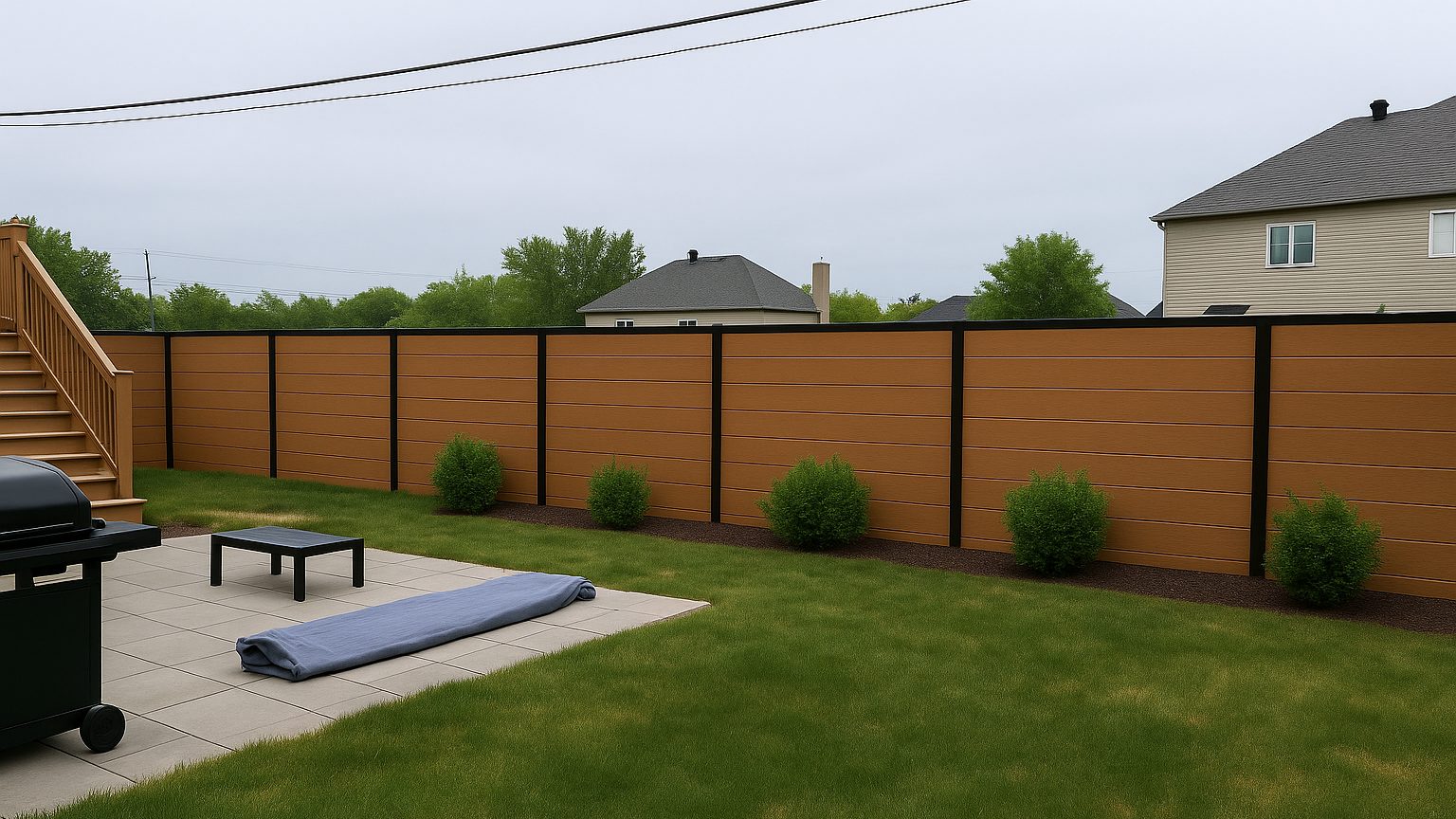
Privacy Fence Materials in Your Backyard Design
Common privacy fence materials in Quebec include pressure-treated wood, composite-style panels, aluminum or ornamental fencing, and aluminum/steel hybrid systems, but the right choice depends less on trends and more on your yard conditions and priorities.
A good material decision usually starts with a few simple questions:
- How much maintenance are you willing to handle over the years?
- Do you want full visual privacy or lighter screening?
- Is your yard exposed to strong wind?
- Do you need the fence to follow a slope closely?
- Is long-term straightness more important than the lowest upfront cost?
The most useful approach is to choose a fence style based on exposure, terrain, and expected maintenance, not appearance or price alone. For homeowners weighing options side by side, comparing wood, chain-link, and ornamental fences directly makes the maintenance and privacy trade-offs easier to see before committing to a material.
Wood Privacy Panels
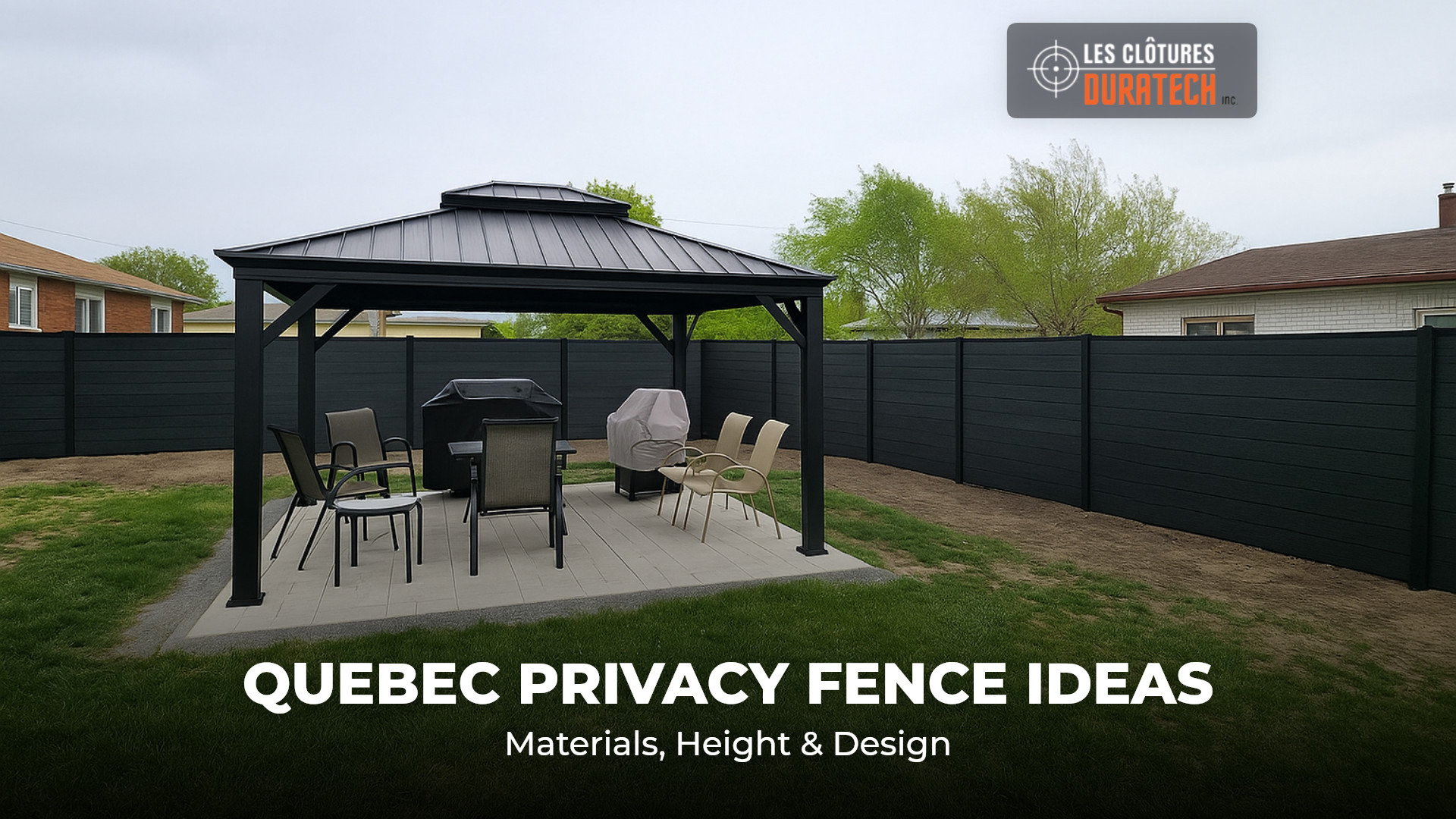
A wooden fence remains popular because it feels natural and provides solid visual separation at a reasonable upfront cost. With regular care, pressure-treated wood typically lasts around 15–20 years, but that depends on staining or sealing every 2–3 years and checking boards annually for warping. The trade-off shows up in wet, shaded, or windy spots, where boards gray, cup, or warp faster and individual planks may need replacing well before the rest of the fence.
Composite-Style Panels
Composite panels trade some warmth of appearance for lower long-term upkeep. There’s no staining or sealing involved, and an occasional rinse is usually enough. They typically hold up longer than wood, often in the 25–30 year range, which offsets a higher purchase price over time. The limitation is choice: color and texture options are more limited than wood, and repairing a single damaged panel can be more involved than replacing a wood board.
Aluminum and Ornamental Fencing
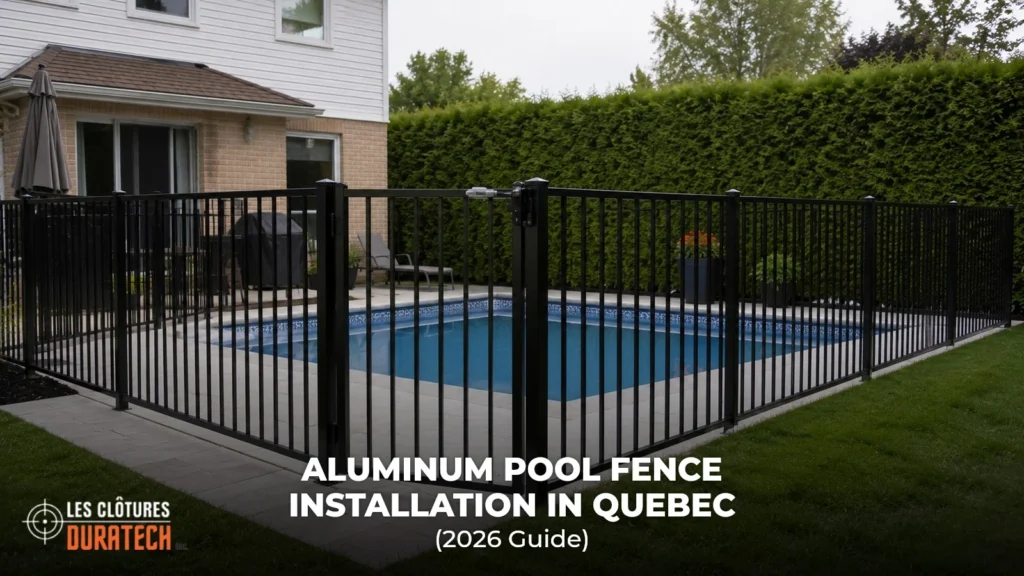
Aluminum and ornamental fencing is a standalone option, not just a frame material for other systems. Built from powder-coated aluminum panels and posts, it won’t rust, warp, or need repainting, and upkeep usually amounts to an occasional wash. Well-installed aluminum fencing commonly lasts 30 years or more, making it one of the longest-lasting choices covered here.
The trade-off is privacy. Standard aluminum or ornamental panels are open by design – closer to a decorative boundary than a screen. Homeowners who want the durability of aluminum along with real privacy usually add privacy inserts, such as slats or panel infill, into the aluminum frame.
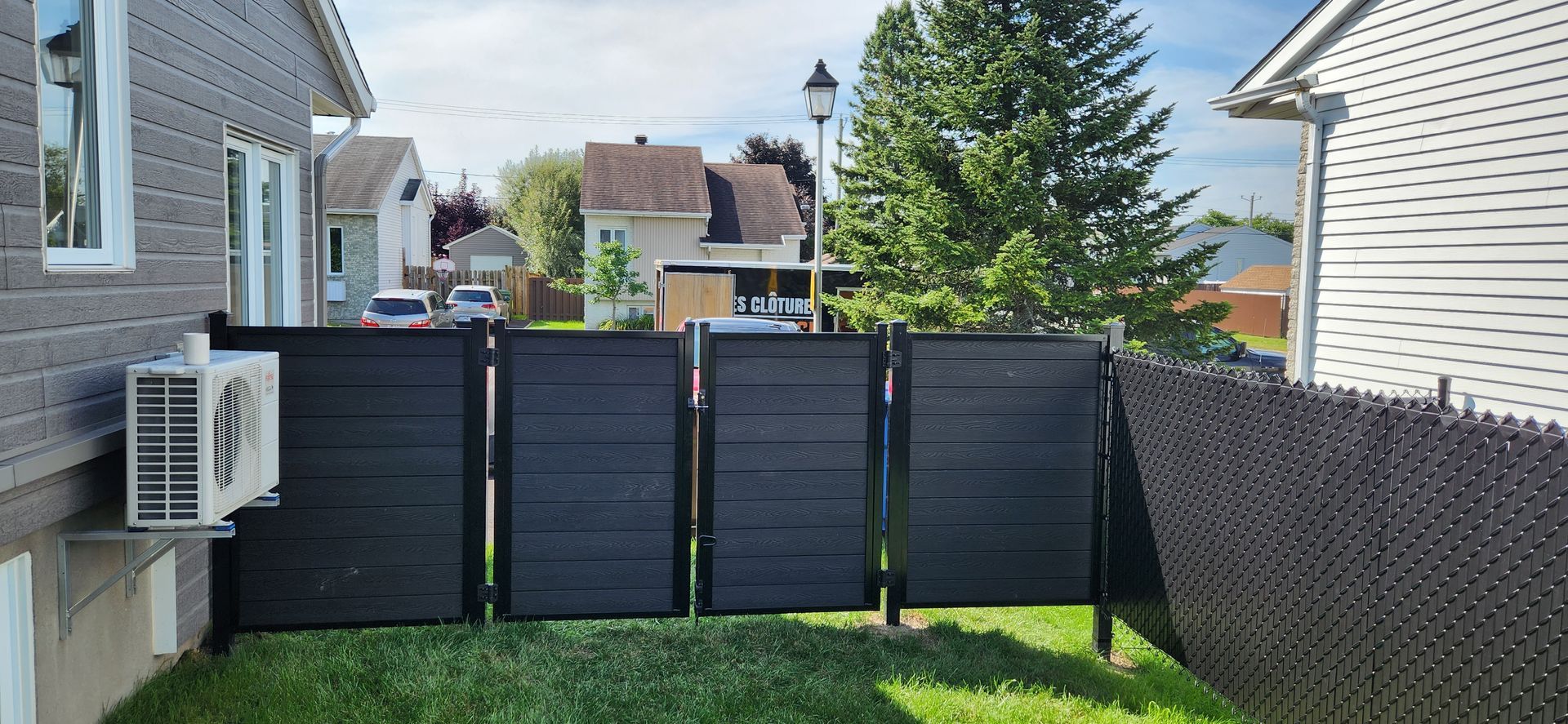
Aluminum and Steel Hybrid Systems
A hybrid fence combines a metal frame – usually aluminum or steel – with wood or composite infill panels. It’s a different product from the standalone aluminum fencing above: here, the frame supplies structure, and the infill supplies privacy. The metal frame itself is close to maintenance-free and can last 25 years or more, giving the structure better rigidity on uneven or windy sites than an all-wood build. The infill still ages on its own schedule, though. Wood or composite sections within a hybrid frame need the same care as if they were used alone, and the frame adds cost that a simple wood fence doesn’t carry. For homeowners comparing options directly, hybrid wood and composite privacy fencing typically offers the best balance of structural rigidity and screening on uneven or windy lots.
Frost Fence with Privacy Slats
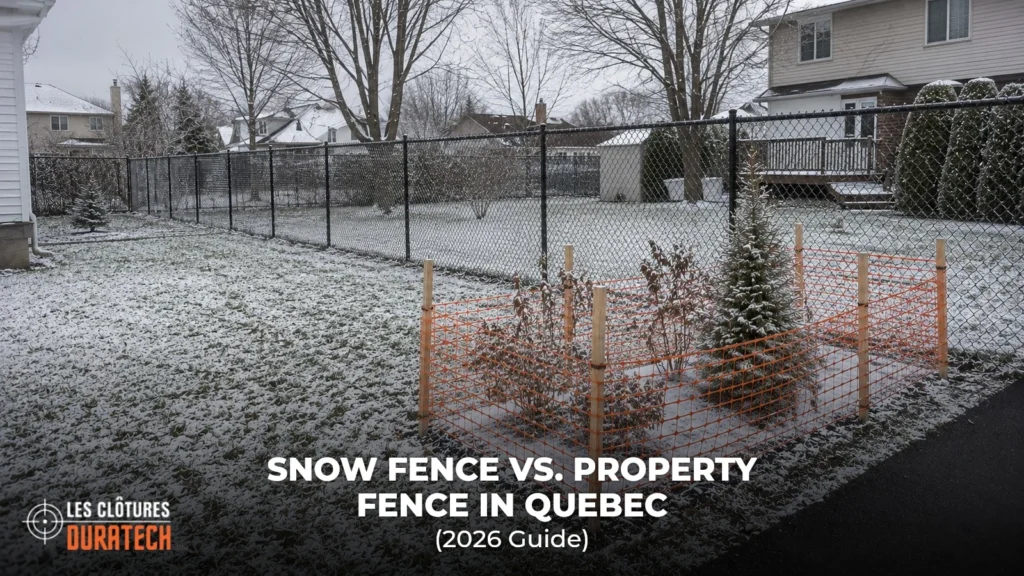
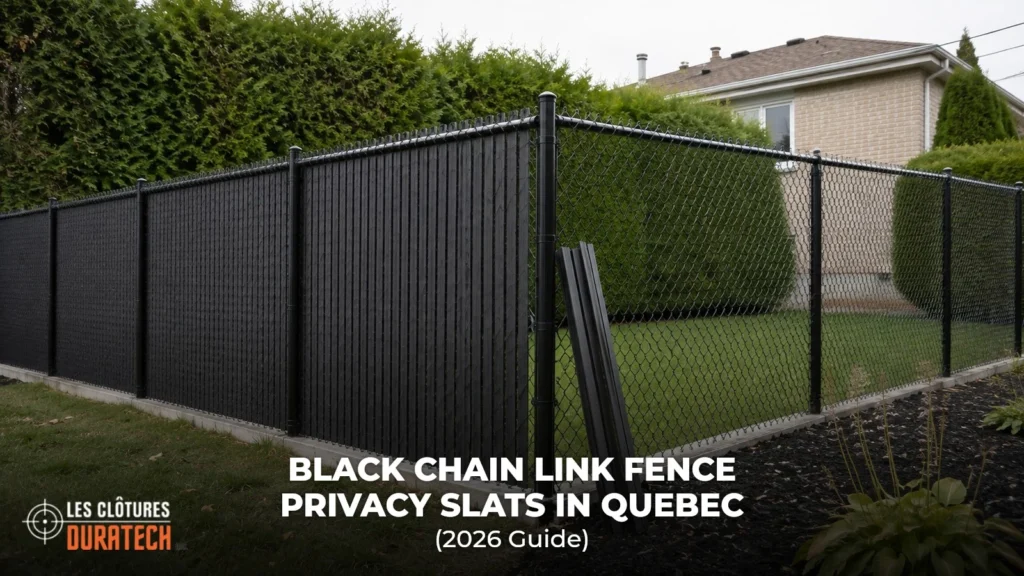
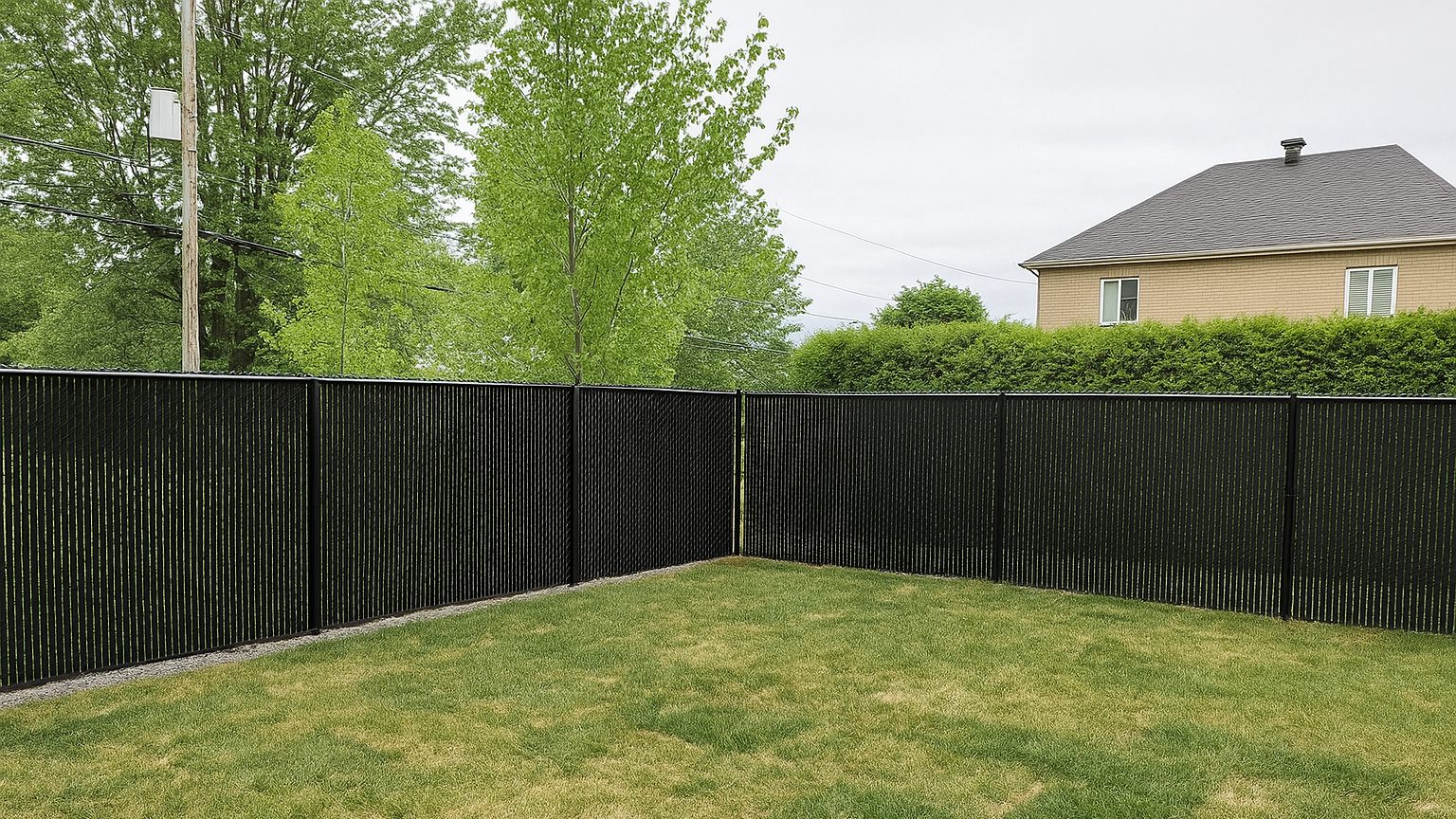
Frost fence in Quebec is a permanent, vinyl-coated chain-link fence, usually black. It’s the lowest-cost route to a fence line, and adding privacy slats brings it closer to full screening without the cost of solid panels. The chain-link structure itself can last 20 years or more, but the slats are the weak point: depending on sun exposure, they often need replacing within 5–10 years, and strong wind can work them loose over time. It’s a practical compromise, not a like-for-like substitute for a solid wood, composite, or hybrid fence.
| Material | Privacy Level | Typical Lifespan | Maintenance | Key Limitation |
|---|---|---|---|---|
| Pressure-treated wood | Full, solid panels | ~15–20 years | Re-stain or seal every 2–3 years; check for warping annually | Warps and grays faster in wet, shaded, or windy spots |
| Composite-style panels | Full, solid panels | ~25–30 years | Occasional rinse; no staining or sealing | Higher upfront cost; fewer color and texture options than wood |
| Aluminum/ornamental | Open by design; full privacy needs added inserts | 30+ years | Occasional wash; no rust protection needed | Higher upfront cost than wood; privacy inserts add to the price |
| Aluminum/steel hybrid | Full to partial, depending on infill | 25+ years for the frame; infill matches its own material | Frame needs almost no upkeep; infill maintained per its material | Infill still ages on its own schedule; frame adds to the budget |
| Frost fence with slats | Partial, screened rather than solid | 20+ years for the chain-link structure | Slats often replaced every 5–10 years | Least solid-looking option; slats can loosen in strong wind |
The lifespans ranges assume proper installation, adequate drainage, and basic maintenance; actual lifespan varies by exposure, use, and site conditions.
What Affects the Real Cost of a Privacy Fence in Quebec
Cost depends on far more than linear footage. Two quotes at the same per-foot rate can cover very different scopes of work, so it helps to know what actually moves the number:
- Material and fence height
- Slope and grade changes across the yard
- Number and type of gates
- Soil conditions and equipment access
- Excavation or extra ground preparation, where needed
- Removal and disposal of an old fence
- Custom fitting to uneven terrain
- Pool-compliant gate hardware, where applicable
Because of that, comparing quotes by price-per-foot alone can be misleading.
At Les Clôtures Duratech, our general reference range for standard residential fencing in Quebec is $25 to $60 per linear foot for a professional 6-foot fence, depending on material, terrain, and site access. The final number is always calculated on-site, once material, height, gates, and terrain are confirmed. Advertised low starting prices online often leave out corner posts, gates, and travel, so a complete quote usually comes in higher.
This range is a general starting point, not a breakdown by material: wood, composite, hybrid, and aluminum privacy fencing each carry different material and labor costs within that band, sometimes above it. The only reliable number for a specific yard, material, and layout comes from an on-site evaluation.
Fence Height and Privacy Planning
In many Quebec backyards, 6 feet is the height homeowners target for full privacy, though the right number depends on the specific layout – slope, deck elevation, and the position of nearby windows all affect how much height is actually needed. A taller fence doesn’t automatically solve every privacy issue: sometimes shifting the layout, like running full height near the patio and a shorter section elsewhere, does more for comfort than adding another foot around the whole yard. Height limits themselves are set locally – the fence height rules in Quebec section below explains how to confirm them for your address.
Quebec Fence Regulations: What to Verify
Fence height, placement, and design details are set locally, so the same fence plan can be approved in one municipality and need adjusting in the next one over. Before finalizing a design, verify:
- The maximum height allowed for your yard – front, side, and rear limits often differ
- Visibility rules for corner lots, which can restrict height near the street
- Setback distances from the property line
- Placement rules for the neighbor-facing side of the fence
If the fence encloses or borders a pool, it also needs to meet the standards in Quebec’s Residential Swimming Pool Safety Regulation (S-3.1.02, r. 1). Self-closing, self-latching gates and specific height and gap requirements apply. Confirm current rules directly with your municipality, since by-laws are updated more often than most homeowners expect.
Planning Your Fence Layout by Use Zone
The most effective privacy fences are planned by use zone, not just by fence-line length. Walk the yard and note where privacy actually matters: the patio, a spa or hot tub, the pool area, the dining space, a play zone for kids, and the service side where bins or utilities sit.
From there, the layout can vary purposefully instead of running one uniform height around the whole property:
- Full-height solid panels near terraces, patios, and any spot facing a neighbor’s windows
- Decorative or open-top sections elsewhere to keep the yard from feeling closed in
- Angled or stepped transitions where the fence follows a slope, instead of a fence that floats above uneven ground
- A separate service gate for bins, firewood, or equipment access, kept apart from the main entry
- Screening panels around heat pumps, air conditioning units, and garbage bins – often the least-planned part of a layout
Contouring the fence to the ground so pets can’t slip underneath is a standard adjustment on sloped or uneven yards, and it’s worth raising during the site visit rather than after installation.
Common Privacy Fence Mistakes Homeowners Make
- Choosing the cheapest material without weighing maintenance. A lower purchase price can mean more time and money spent on staining, sealing, or repairs over the years.
- Ignoring slope and ending up with bottom gaps. A fence installed without contouring to the ground often leaves gaps large enough for pets to get through, or looks uneven from the yard.
- Assuming height alone solves privacy. Next to a raised deck or a second-floor window, placement and layout often matter more than an extra foot of height.
- Skipping permit and by-law checks before ordering materials. Height, setback, or pool-enclosure rules confirmed too late can mean reworking a fence after it’s built.
- Underestimating post depth and concrete curing time. Posts set too shallow, or put under load before the concrete has properly cured, are the most common cause of leaning or heaving fences within a few winters.
Frost-Resistant Posts for Long-Term Performance
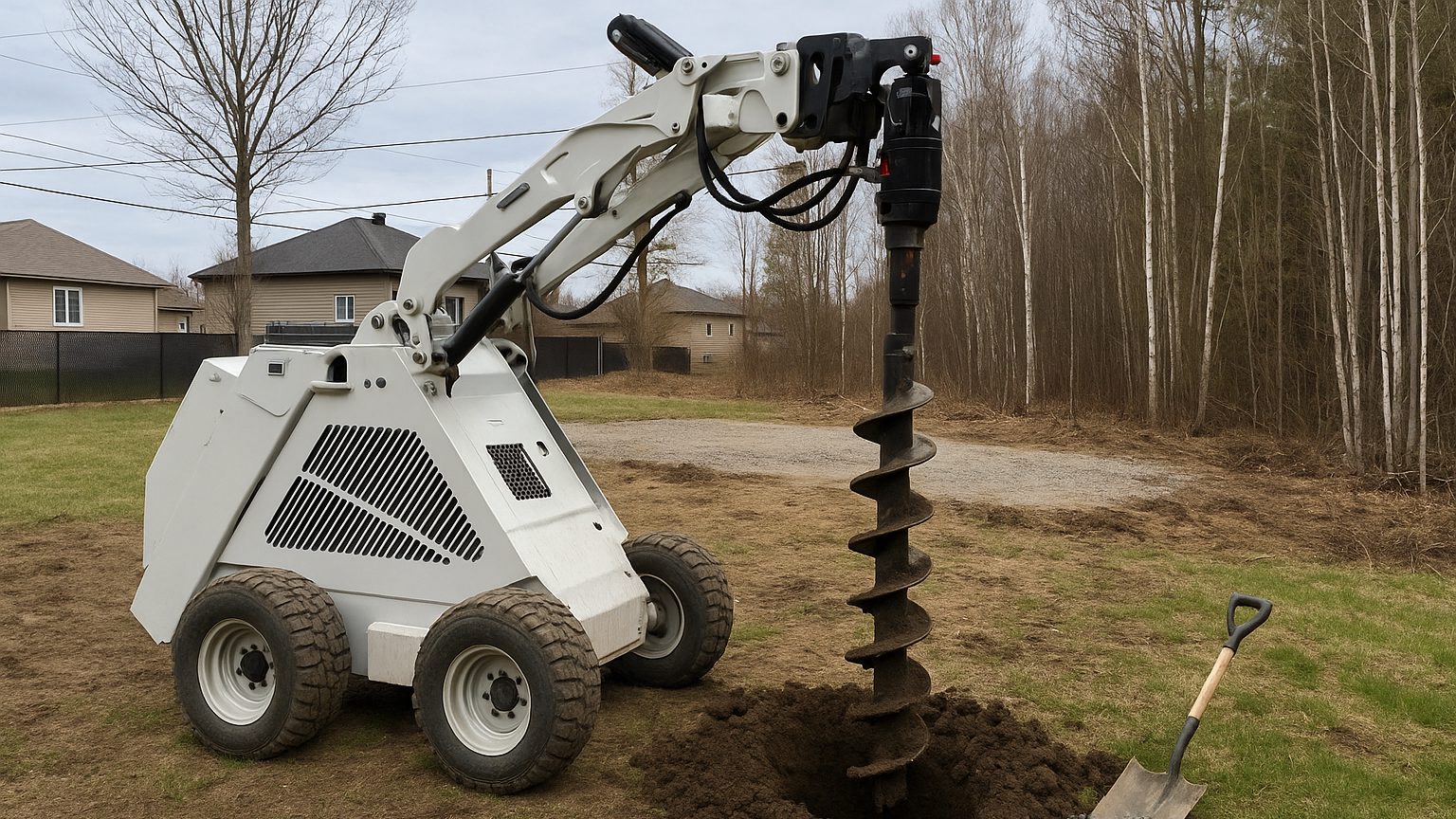
The biggest structural risk to a fence in Quebec is frost heave. Clay-heavy soils common across the region hold water and expand as they freeze, and a post that isn’t set deep enough gets pushed upward season after season until it leans or fails.
Before drilling begins, locating underground utilities before digging is a standard early step on any Quebec property, since buried gas, electrical, or telecom lines can sit closer to the surface than expected. We, at Les Clôtures Duratech, install posts with deep drilling below the frost line, concrete footings sized to local ground conditions, and a 14-day concrete curing standard before tension or final structural load is applied. That cure period is standard practice on every installation, not an optional step. It’s the difference between a fence that stays straight through its first few winters and one that starts leaning by the second.
Privacy Fence Trends in Quebec for 2026
A few looks have become popular across Quebec backyards heading into 2026: horizontal privacy boards instead of traditional vertical pickets, black metal framing paired with warm wood or composite inserts, mixed aluminum-and-composite textures, clean gate lines, and tones that pick up the color of nearby windows or soffits rather than clashing with them.
2 Real Cases
Case 1 — Family backyard in Chambly. The owners wanted more privacy around a patio and above-ground pool but were worried a tall fence would make the yard feel boxed in. We designed a layout with full privacy where the family spent the most time, then softened the perimeter with cleaner transitions and compliant gate planning for the pool area. In this case, the yard gained more privacy without taking on an overly heavy appearance.
Case 2 — Sloped property in the Saint-Jean-sur-Richelieu area. This client had a rear lot with noticeable grade changes and a dog that kept finding openings under the old fence. We replaced the enclosure with a better-adapted privacy solution, drilled deep for winter stability, and custom-fitted the lower sections to the terrain. This helped the property owner create a cleaner, more private layout with fewer gaps along the ground.
FAQ
What’s the best privacy fence material for Quebec?
There’s no single best material. It depends on your priorities. Pressure-treated wood gives a warm look at a lower upfront cost but needs regular staining. Composite costs more initially but needs far less upkeep. Aluminum and ornamental fencing lasts the longest with the least maintenance but isn’t private on its own – it needs added inserts. Aluminum/steel hybrid systems hold up best on windy or uneven sites. The right pick usually comes down to how much maintenance you want to take on versus how much you want to spend up front.
How high can a privacy fence be in Quebec?
It depends on your municipality. Six feet is a common target for full privacy, but exact limits vary by city and can differ between front, side, and rear yards, and near corner lots. Always confirm the number for your address before finalizing a design.
Does frost really affect fence posts in Quebec?
Yes. Clay-heavy soils common across the region hold water and expand as they freeze, and posts that aren’t set deep enough get pushed upward year after year. That’s why deep drilling below the frost line and a full concrete cure matter more here than in many other climates.
Can a frost fence be used for privacy?
On its own, no. A standard chain-link frost fence is open. Adding privacy slats closes most of the gaps at a lower cost than a solid wood, composite, or hybrid fence, though it won’t look or perform exactly like a fully solid panel.
What are the rules for a pool fence in Quebec?
Pool enclosures in Quebec are governed by the province’s pool safety regulation (S-3.1.02, r. 1), which sets requirements for height, gaps, and self-closing, self-latching gates. Municipalities can add their own requirements on top of the provincial rule, so confirm the current standards with your municipality before installing or modifying a pool fence.
Ready to Plan Your Privacy Fence Project?
Free Consultation: Les Clôtures Duratech offers a free on-site consultation across the South Shore and Montérégie.
A site visit clarifies your yard’s slope, access, and soil conditions, and confirms whether permits, extra site prep, drainage work, or pool-gate planning will be needed. It’s best to plan early – Quebec’s construction season runs from spring to late fall, and good installation slots fill up.
This article is provided for general information only and does not replace an on-site evaluation. Municipal by-laws, pool-enclosure requirements, permit rules, setbacks, and material availability vary by city and can change without notice – always confirm current requirements with your municipality before starting a project. Height limits, layout ideas, material lifespans, and the cost range mentioned in this article are general references, not quotes: actual pricing, materials, and compliance for your specific property are confirmed on-site and, where applicable, with your local municipality.