

If you have just bought a home in Quebec or are looking to upgrade your backyard, you have likely heard contractors and neighbors use the term “Frost Fence.” But what exactly is it?
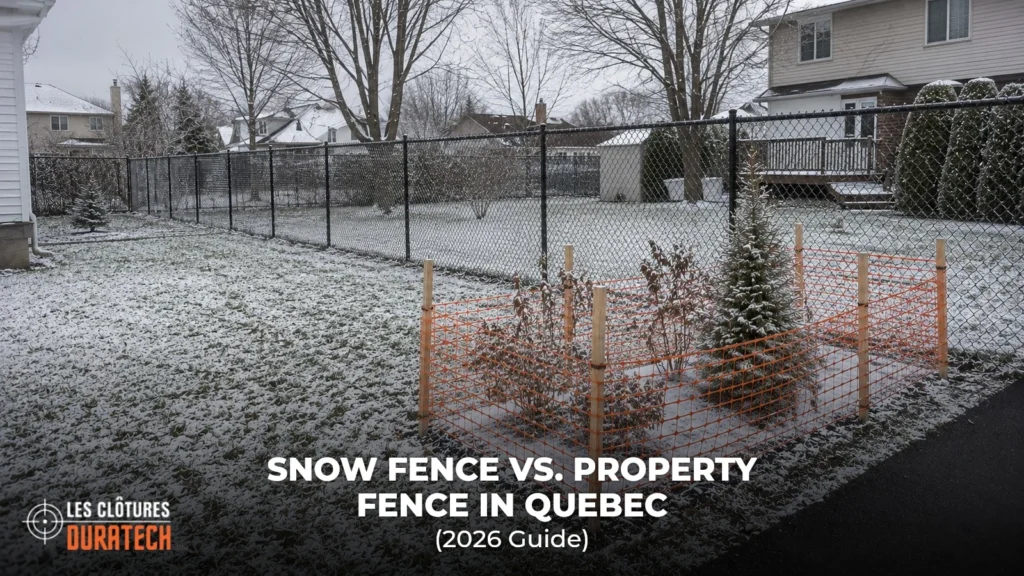
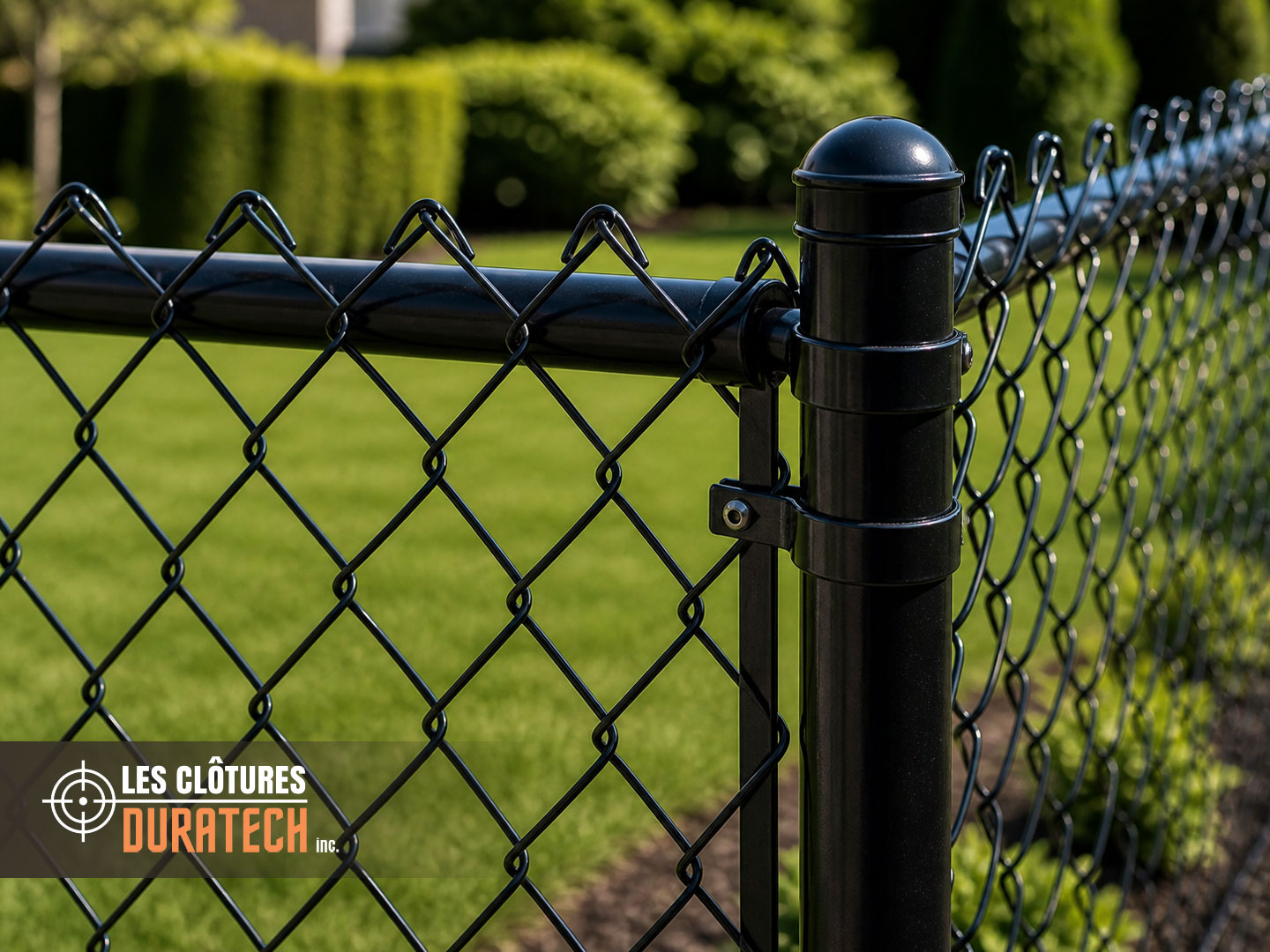
Outside of our province, some people use this term to describe temporary wooden snow barriers. However, in Quebec, ‘Frost fence’ is a common local term for chain-link fencing. In residential projects, this often refers to vinyl-coated chain-link used for backyards, pet enclosures, and perimeter fencing.
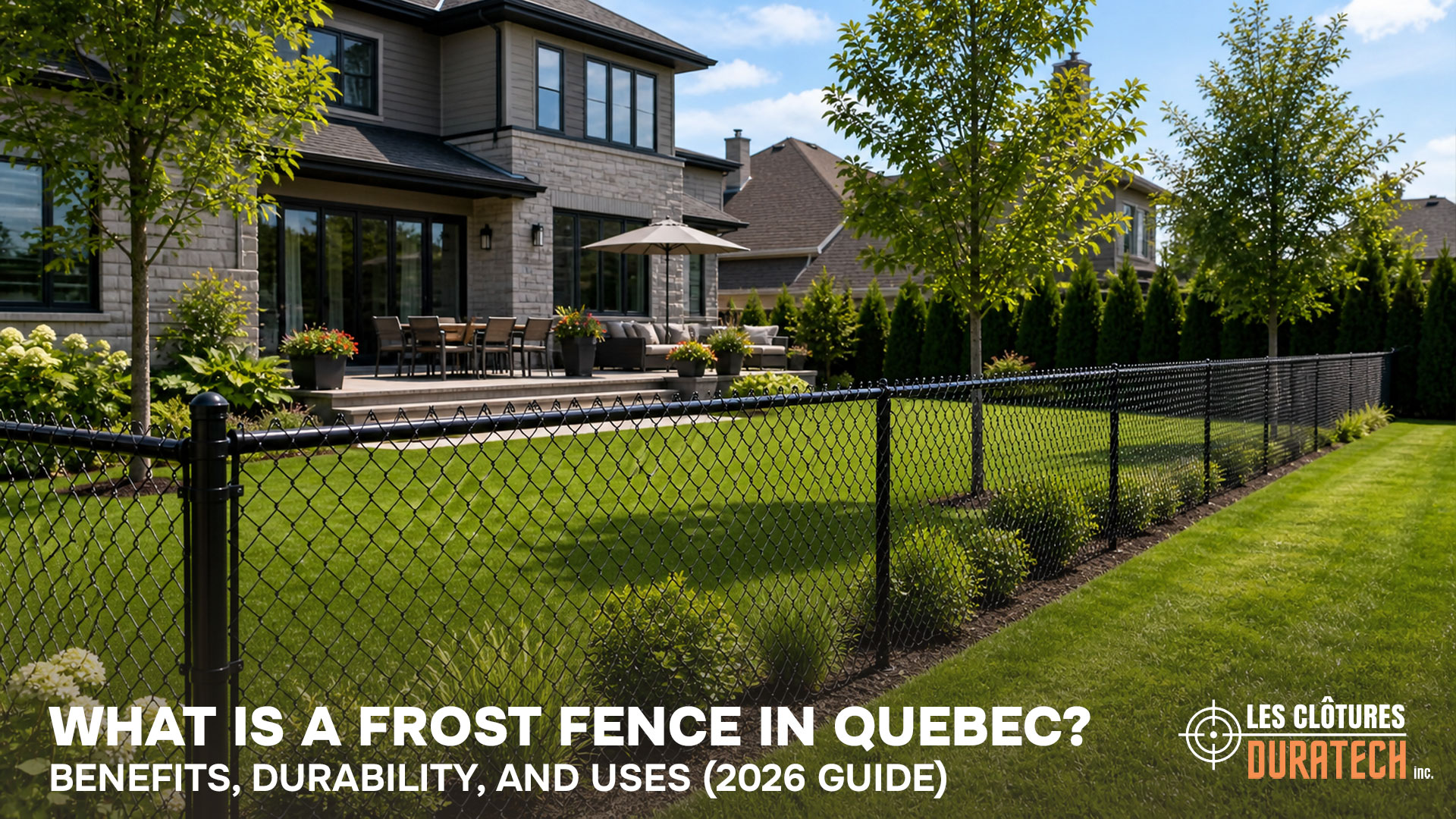
This design offers a unique combination of strength and visibility. Unlike solid wood or privacy panels that can block your view and make a yard feel small, the open diamond mesh of a Frost fence secures your property while seamlessly blending into the natural surroundings.
This 2026 guide will explain the origins of the name, the benefits of choosing this system, its lifespan, and why it remains a very popular choice for backyards and many residential fencing projects across South Shore Montreal.
The Origin: Why Is It Called a “Frost” Fence?
The name is commonly associated with two ideas in Quebec:
- The Brand History: In the early 20th century, the Frost Steel and Wire Company was a leading manufacturer of woven wire fencing in Canada. Over decades, “Frost fence” became a proprietary eponym (like calling a tissue a Kleenex), even though people outside the province may use different terms.
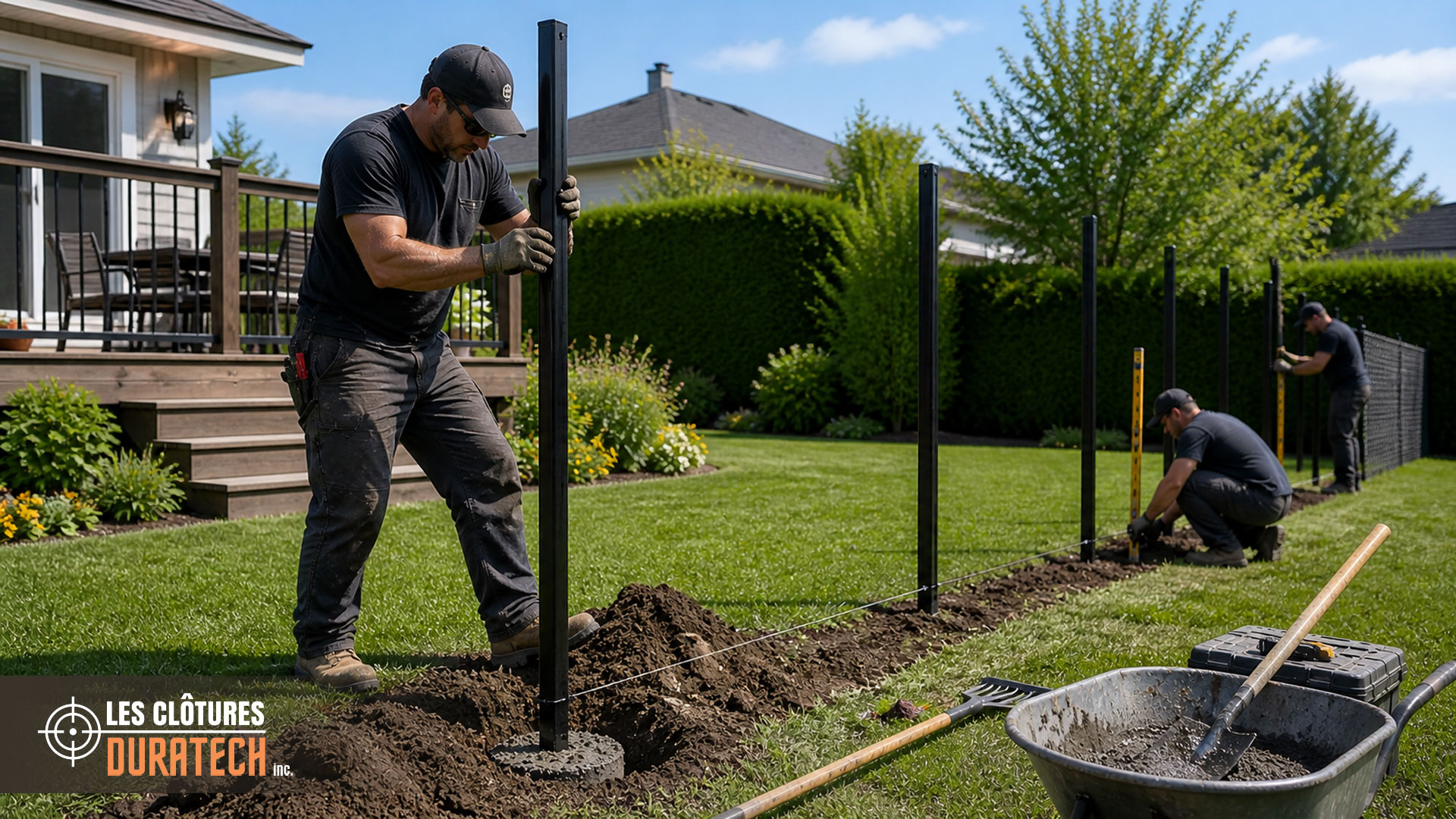
- The Climate Reality: In Quebec, our deep freezes cause the ground to expand and contract violently – a phenomenon known as frost heave. A properly installed Frost fence features posts anchored deep below the frost line in concrete, helping it withstand Quebec winters with a lower risk of shifting or leaning.
Frost Fence vs. Galvanized Chain Link
While they share the same woven-diamond structure, there is a strict difference in how these fences are used today:
- Galvanized Chain Link: This is raw, silver-coloured steel. It is highly durable but industrial in appearance. It is more commonly associated with utilitarian, commercial, or industrial-looking projects, while vinyl-coated versions are often preferred for residential yards.
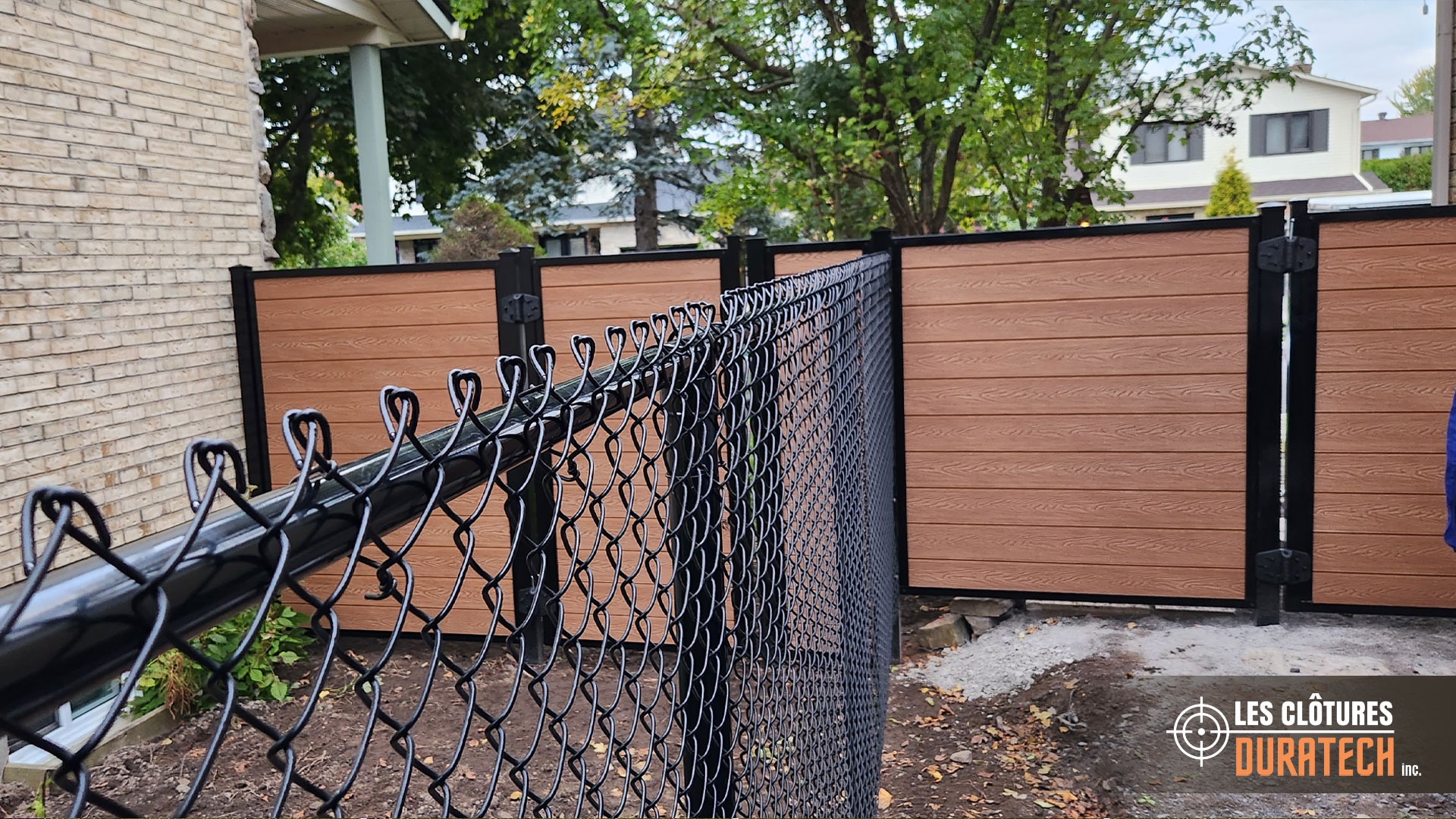
- Frost Fencing: This is the residential version. The steel wire is heavily galvanized and then coated in a thick, UV-resistant vinyl layer. It is soft to the touch, highly aesthetic, and perfect for backyards, dog enclosures. Black is the most popular residential choice because it blends into landscaping and creates a cleaner, less visually dominant look. It is followed by white and green.
The Benefits of Installing a Frost Fence
For homeowners in Chambly, Montérégie, and the greater South Shore, the Frost fence offers an unbeatable combination of features:
1. Maximum Durability & Low Maintenance
Unlike wood, which rots, warps, and requires staining every few years, a vinyl-coated Frost fence is a low-maintenance option that typically requires far less upkeep than wood. The thick coating protects the steel core from rust, rain, and snow.
2. Cost-Effective Choice for Many Homeowners
Compared to solid wood, composite, or ornamental aluminum or steel fencing, a Frost fence is highly budget-friendly. It provides a secure property boundary and keeps pets safe at a fraction of the cost of heavier materials.
3. Upgradeable Privacy
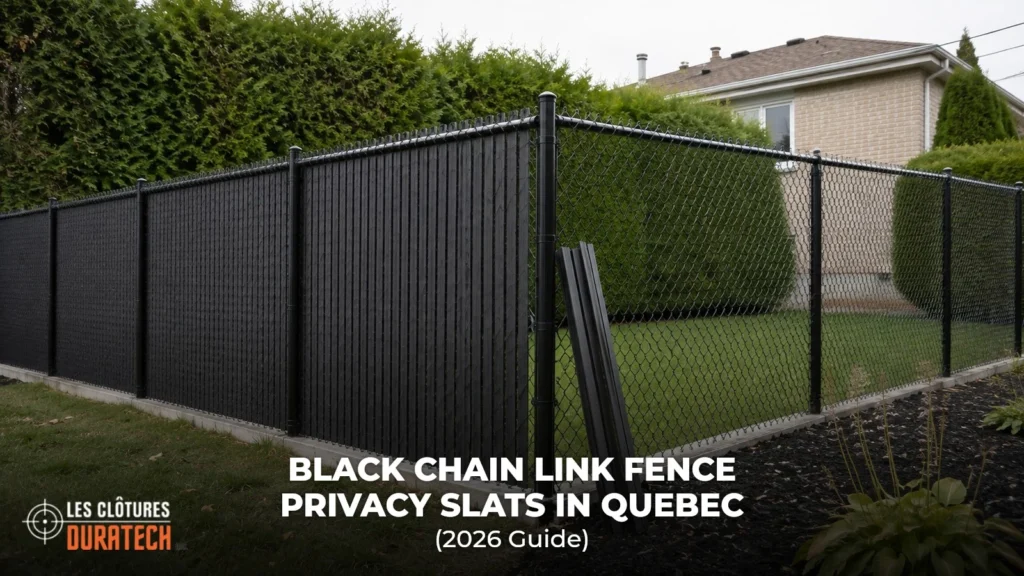
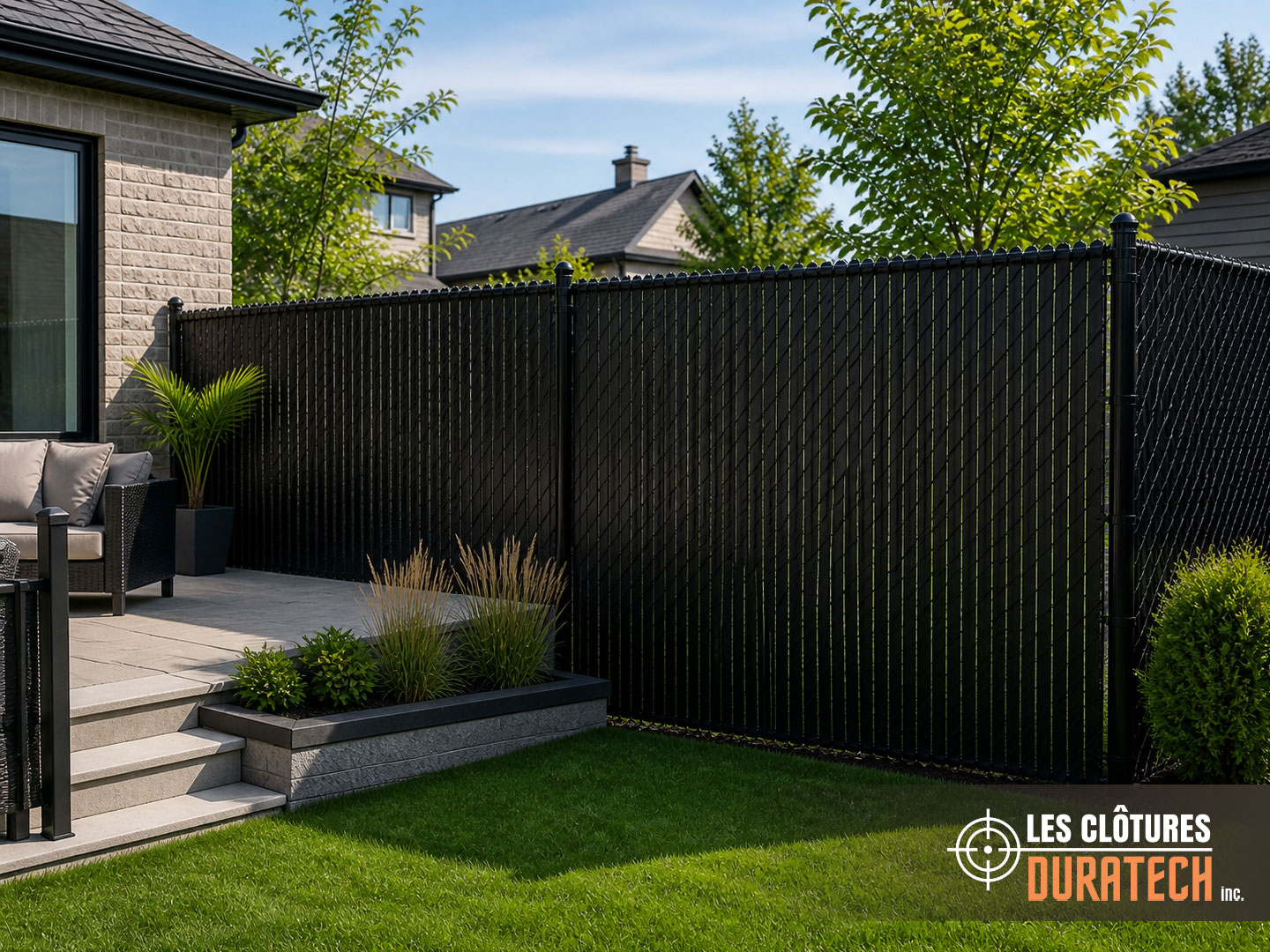
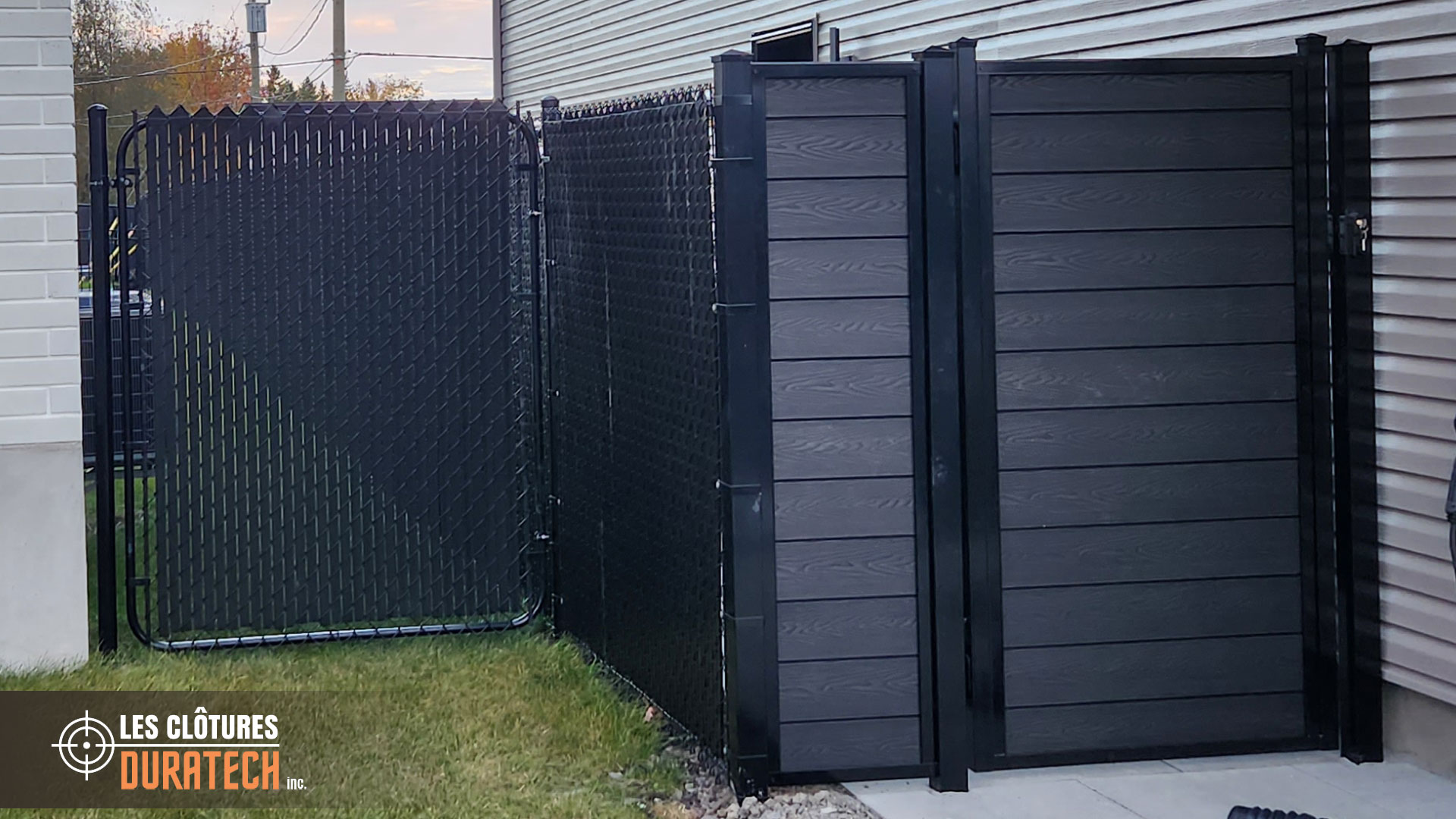
One of the greatest benefits of a Frost fence is its adaptability. If you install an open mesh fence today but decide you want a secluded yard next year, you can easily weave privacy slats (lattes) vertically into the mesh. This instantly transforms an open boundary into a private retreat.
4. Durability in Quebec Conditions
The defining characteristic of a Frost fence is its ability to survive the brutal Quebec winters. However, durability hinges entirely on installation quality – specifically, how the posts are anchored.
Combating Frost Heave
In the South Shore (Montérégie), the clay-rich soil expands dramatically when it freezes. This “frost heave” can easily push shallow fence posts out of alignment. At Les Clôtures Duratech, our installation standard is to drill deep below the frost line and allow the concrete proper curing time before tensioning the mesh. We use a 14-day curing period as our company standard to help reduce the risk of future post movement. If the wire is tensioned while the concrete is still too soft, winter freeze-thaw cycles can compromise the fence’s long-term alignment and stability. This approach helps improve long-term stability and reduces the risk of premature post movement.
Material Lifespan
- The Steel Core: Provides rigid structural integrity against impacts and high winds.
- The Vinyl Coating: Prevents the steel from rusting, oxidizing, or degrading under UV exposure. With quality materials, proper installation, and reasonable care, a high-quality Frost fence can often last 20 years or more.
What Matters Most for Long-Term Performance?
A Frost fence performs well in Quebec when three things are done properly:
- the posts are installed at the right depth
- the concrete is given proper curing time
- the fence is tensioned correctly for the terrain
Site conditions such as slope, clay-heavy soil, drainage, and winter ground movement can all affect long-term alignment. That is why installation quality matters just as much as the fence material itself.
Ideal Applications for Frost Fencing
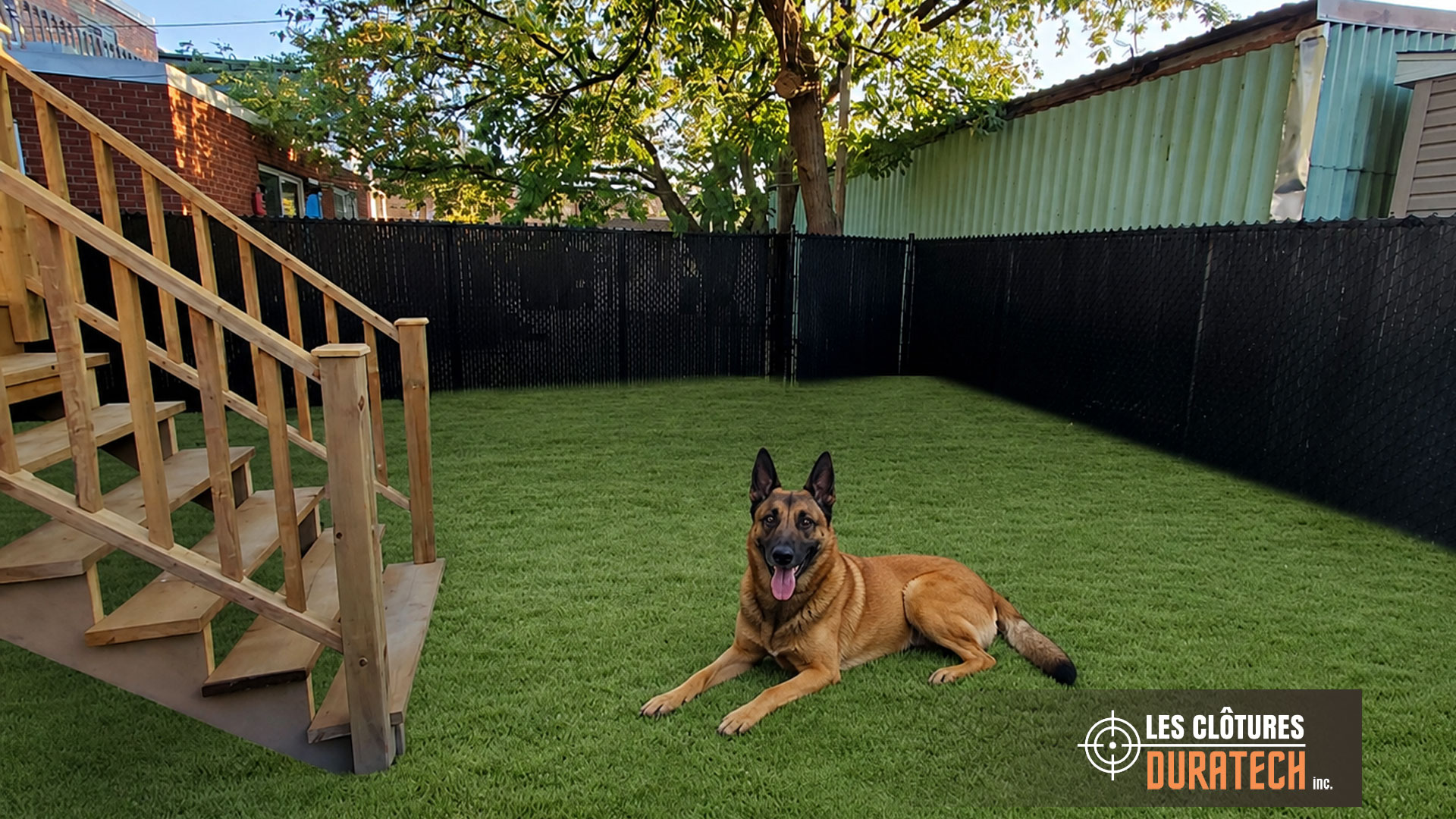
- Property Boundaries: The most economical way to mark your property line and keep dogs safely contained in the yard.
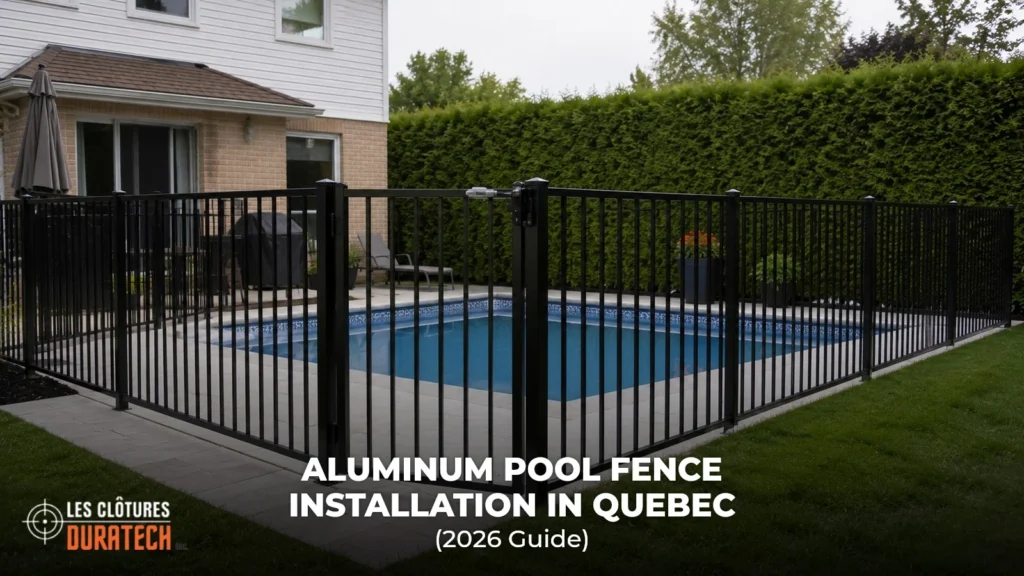
- Pool Enclosures: Chain-link fencing can sometimes be used for pool enclosures, but only after a compliance review. In Quebec, mesh size, slats, gate hardware, and installation details must meet specific safety requirements, and some chain-link rules depend on when the fence was installed or replaced.
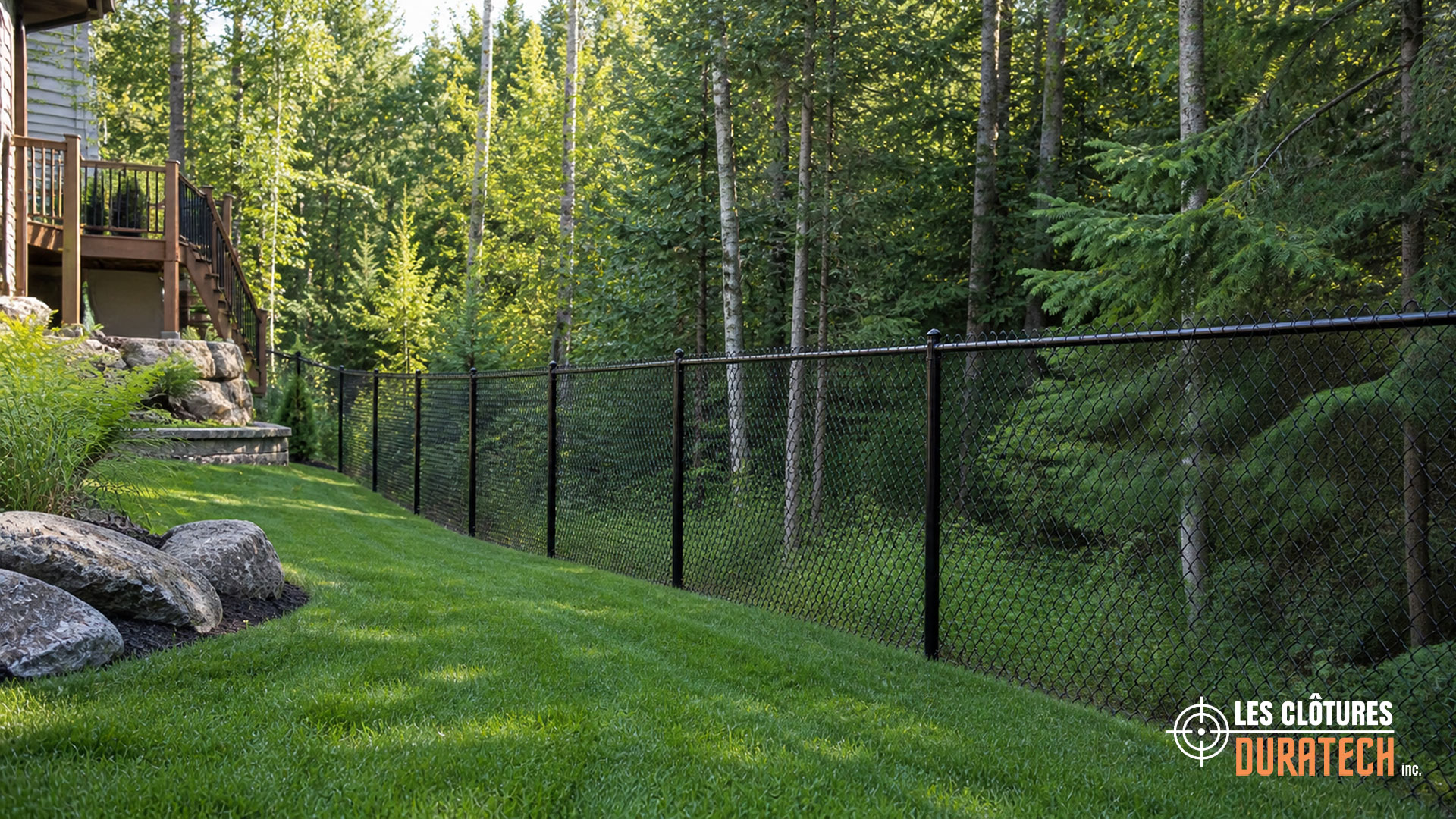
- Woodland Lots: For homes backing onto forests or parks, a black Frost fence acts as a visually discreet barrier, securing the yard without obstructing the natural view.
Who Frost Fencing Is Best For
Frost fencing is a smart choice for homeowners who want a practical balance of price, visibility, and durability. It is especially well suited for:
- homeowners on a budget,
- pet owners,
- people who want open sightlines,
- properties with long perimeters or uneven terrain.
When Frost Fence Is Not Ideal
Frost fencing is not the best option in every situation. It may be less suitable if:
- the homeowner wants full privacy without slats,
- a municipal by-law requires a different fence style,
- the pool enclosure needs special compliance review before installation.
| Fence Type | Best For | Main Advantage | Main Limitation |
| Frost fence | Budget-friendly yards, pets, visibility | Low-maintenance and cost-effective | Limited privacy without slats |
| Ornamental aluminum | Pool areas, modern homes | Clean look and strong visibility | Higher cost |
| Wood | Privacy-focused yards | Natural solid barrier | Requires more maintenance |
| Composite | Premium privacy projects | Durable and attractive | More expensive |
Installation Timing: When to Build Your Fence
The optimal timing for Frost fence installation in Quebec is dictated by the ground thaw.
- Spring (typically late April to June): In most years, the ground has thawed enough to make drilling cleaner and more efficient. Booking early is essential, as this is peak season for pool installations.
- Summer (July to August): Ideal digging conditions. A great time for rapid installations, provided there are no extreme heatwaves affecting concrete curing times.
- Autumn (September to November): An excellent “hidden gem” season. The ground is still soft, and installing in the fall means your yard is 100% ready the moment the snow melts next spring.
- Winter: Installation is generally not recommended because frozen ground makes drilling difficult and concrete work less reliable.
2 Real Cases on the South Shore
Case 1: The New Build in St-Jean-sur-Richelieu
A young family purchased a new build with an open, muddy backyard. They needed to secure the yard for their two large dogs but were on a strict budget after the home purchase. A 5-foot black Frost fence was installed around the perimeter. It provided immediate security, blended into the background, and allowed them the option to add privacy slats in the future once their landscaping matured.
Case 2: Replacing a Rotted Wood Fence in Chambly
A homeowner had an old, leaning cedar fence that had been destroyed by heavy snow loads and frost heave. Duratech removed the old wood, drilled new, deeper holes below the frost line, and poured fresh concrete. The homeowner chose a 6-foot Frost fence with pre-installed privacy slats. The result was a straight, low-maintenance boundary designed for Quebec conditions and built for long-term durability.
FAQ
1. How long does a Frost fence last in Quebec? When installed correctly with proper footings and quality materials, a Frost fence can last many years in Quebec. Its lifespan depends on installation quality, site conditions, and basic upkeep.
2. What is the most popular colour for a Frost fence? In 2026, Black is one of the most popular residential choices because it blends well into landscaping and usually feels less visually dominant than brighter fence colours.
3. Can a Frost fence improve buyer appeal? It can, especially for buyers who value a defined yard, pet safety, or a ready-to-use backyard space.
4. Can frost heave destroy my new fence? It can destroy a poorly installed fence. If the contractor digs shallow holes or stretches the wire before the concrete is fully cured, the winter freeze will push the posts out of the ground. Proper depth and curing time are essential.
5. Can I make my Frost fence private later? In many cases, yes. Privacy slats can often be added later, depending on the fence model, mesh, and local requirements.
6. Is Frost fence the same as chain-link fence in Quebec? Generally, yes. In Quebec usage, “Frost fence” usually refers to chain-link fencing (“clôture à mailles de chaîne”). In residential contexts, people often use Frost for the vinyl-coated version, but in everyday local language the two terms are often treated as near-equivalents.
7. Can I use a Frost fence around a pool? Sometimes, yes – but only if it complies with Quebec pool-safety rules. Quebec’s regulation applies to outdoor residential pools that can hold 60 cm or more of water. When an enclosure is required, it must be at least 1.2 m high, prevent the passage of a 10 cm sphere, and not be easy to climb. If the enclosure is a chain-link fence, the mesh may need to be 30 mm or less, or privacy slats may need to be added, depending on when the fence was installed. Because these rules are specific and can be updated or interpreted locally, pool enclosures should always be reviewed for compliance before installation or modification.
8. Do I need a permit to install a fence? For standard fences, permit requirements vary by municipality. Some cities do not require a permit for a regular fence if local rules are respected, while others may have additional restrictions. For pool fences and pool enclosures, a municipal permit is generally required.
Disclaimer: While a Frost fence is an excellent choice for residential properties, local municipalities on the South Shore and in Montérégie may have specific by-laws regarding maximum fence heights, placement near property lines, and required mesh sizes for pool enclosures. Always consult your local urban planning department and obtain necessary permits before installation. Before any digging begins, an Info-Excavation request must be completed. In Quebec, this is a standard and essential safety step before installing a fence.
Ready to Secure Your Yard?
Whether you are securing a new pool, keeping pets safe, or defining your property line, Les Clôtures Duratech installs straight, durable Frost fences built for Quebec conditions.
Contact us today to schedule your on-site evaluation and get a transparent quote.