

Installing a new fence requires more than just picking a style and color. In Quebec, installing a fence without checking the local bylaws can result in municipal fines, bitter neighbor disputes, and the costly nightmare of having to tear down your brand-new project.
Fence height rules are not uniform across the province; they change drastically depending on the city, the zoning, and the specific layout of your lot. Furthermore, the province has recently cracked down on pool safety, implementing strict new laws that affect thousands of older homes.
Before you dig a single hole in Montérégie or the South Shore, you must know the rules. This comprehensive guide breaks down the essential checks for front yards, backyards, corner lots, and pool enclosures, plus expert tips on how Les Clôtures Duratech ensures your fence survives the Quebec winter.
Understanding Municipal Fence Height Regulations
Residential fence height rules in Quebec are primarily set by municipal bylaws and may vary by location and zoning:
- Front yard
- Side yard
- Backyard
- Corner lots
- Property type
- Pool presence
- Fence material
While exact numbers vary by town, many municipalities follow a similar pattern, but homeowners should verify local bylaws:
- Front Yards: Strict, lower limits (often around 1.0 m to 1.2 m) to maintain street aesthetics and driver visibility.
- Backyards & Side Yards: Higher allowances (typically 1.8 m to 2.0 m, or roughly 6 feet) to provide privacy and security.
These are common ranges, not provincial standards.
Pre-Installation Checklist: What to Verify
| What to Verify | Why it Matters | Common Homeowner Mistake |
| Yard Designation | Front, side, and back yards have entirely different limits. | Assuming the 6-foot backyard rule applies everywhere. |
| Lot Line Location | Prevents boundary disputes and setback issues with neighbors. | Guessing the line instead of using a Certificate of Location. |
| Finished Grade | Changes the legal height calculation. | Measuring from the wrong side of a slope. |
| Corner Visibility | Required for traffic, cyclist, and pedestrian safety. | Blocking street visibility with an opaque, tall fence. |
| Pool Compliance | Separate provincial law overrides local bylaws. | Assuming an older pool is exempt from current rules. |
What to Bring to Your Consultation
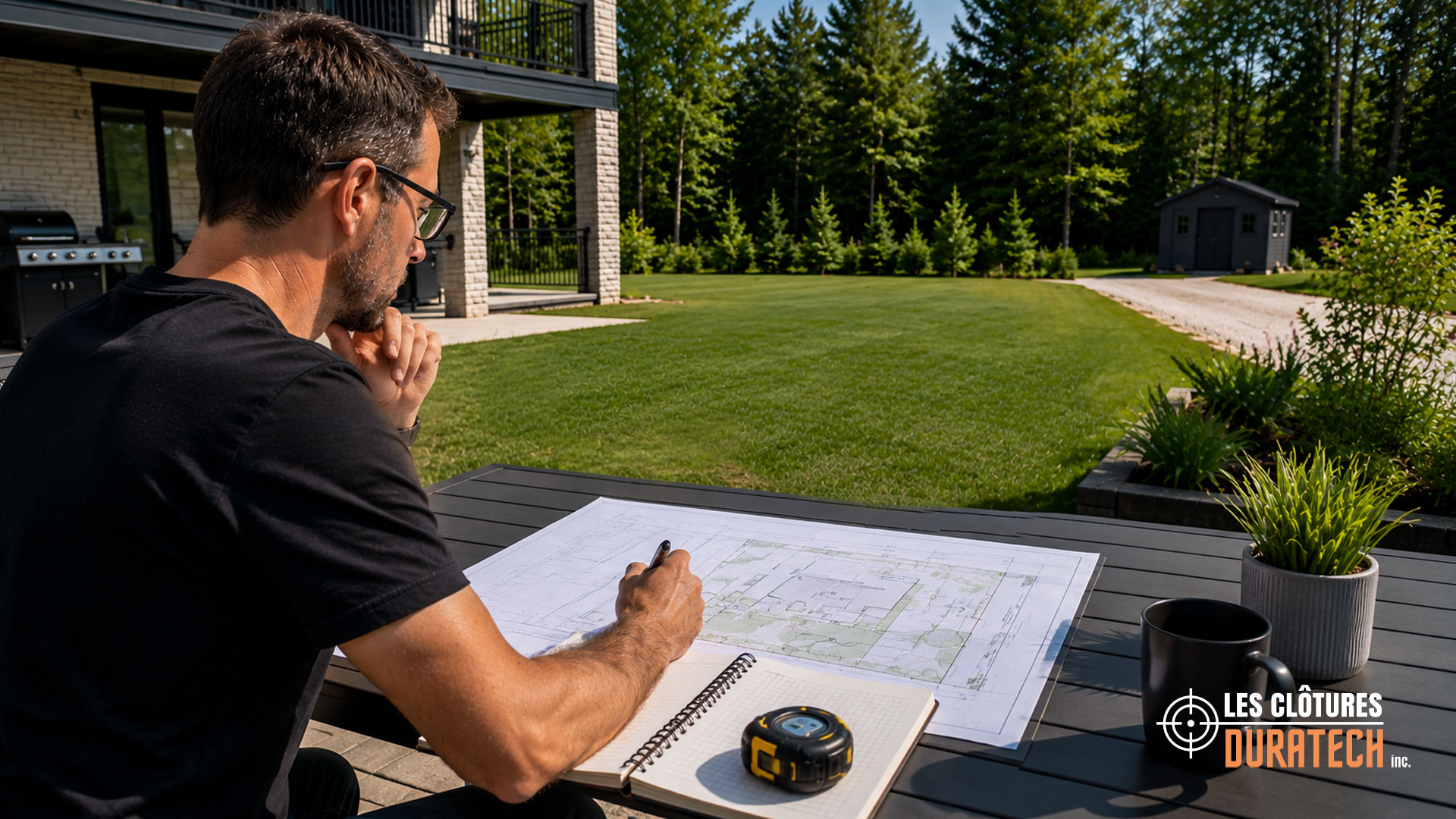
Please bring your Certificate of Location, a few photos of the yard, and any notes about neighbor concerns or boundary questions. These details help us review the layout faster, spot potential issues early, and give you a more accurate recommendation.
The Nuances of Measuring: Reviewing Residential Fence Bylaws
Bylaw review involves more than just noting a single height number. Homeowners must confirm municipal definitions for a variety of property features. When measuring for legality, a professional contractor must evaluate:
- Finished Grade Level: On sloped properties, height may be calculated from the lower side of the slope, not the higher side. This distinction is critical on hilly terrain or recently landscaped lots.
- Retaining Wall Contexts: If a fence sits on top of a retaining wall, does the city calculate the height from the base of the wall or the base of the fence?
- Decorative Elements: Do lattice tops, post caps, or decorative finials extend above the legal panel limit?
- Hedges vs. Fences: Some towns have separate height limits for dense cedar hedges versus structural fences.
Height rules generally apply equally to hybrid fences with aluminum, steel, wood, or composite elements. While your choice of style may vary, the strict bylaw limit typically remains constant.
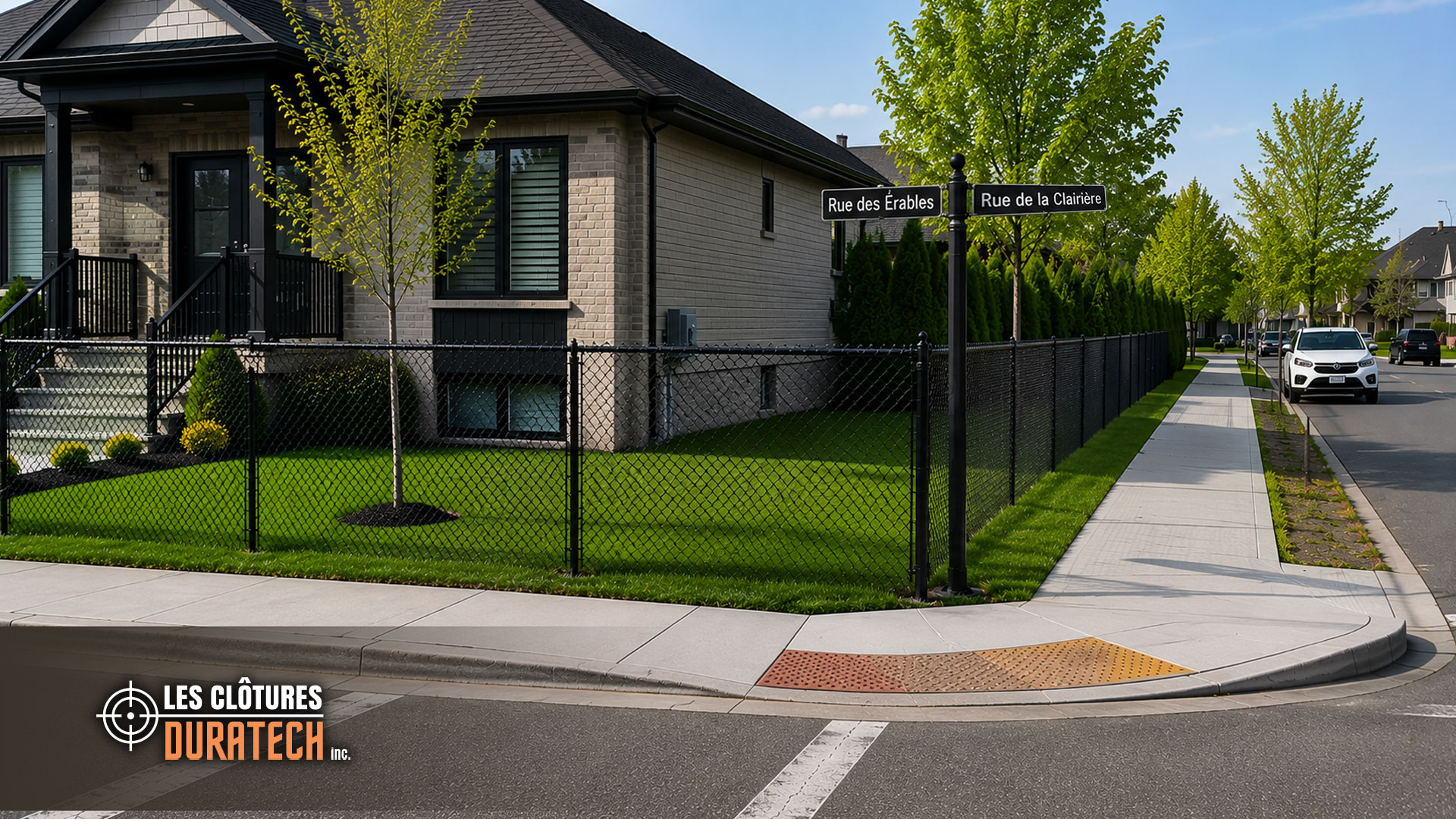
Fence Height Restrictions on Corner Lots
Corner lots require special attention due to visibility triangle or clear sightline rules. Even where higher fences are allowed elsewhere, reduced heights are mandatory near street intersections or driveway exits to protect drivers, cyclists, and children on school routes.
On corner properties, concerns extend beyond maximum height to include fence opacity and distance from the curb or sidewalk:
| Situation / Configuration | Typical Concern | What to Check Before Installing |
| Corner Lot Near Intersection | Blocked driver view of oncoming traffic. | Specific dimensions of the municipal sight triangle. |
| Driveway Exit | Poor visibility for vehicles pulling onto the street. | Reduced fence height requirements near the opening. |
| Decorative Solid Panel | Excessive opacity blinding a street corner. | Allowed material types and transparency percentages. |
| Pool on a Corner Lot | Overlap of two completely different rule sets. | How the pool safety law integrates with the corner bylaw. |
At Duratech, we perform thorough transparent on-site evaluations to measure these exact triangles. We design the layout to maximize your usable yard space while keeping you 100% legally compliant.
Pool Fence Requirements Under Quebec Law
This is a critical height rule. The Quebec government mandates that ALL residential pools must be compliant by the September 2027 provincial compliance deadline.
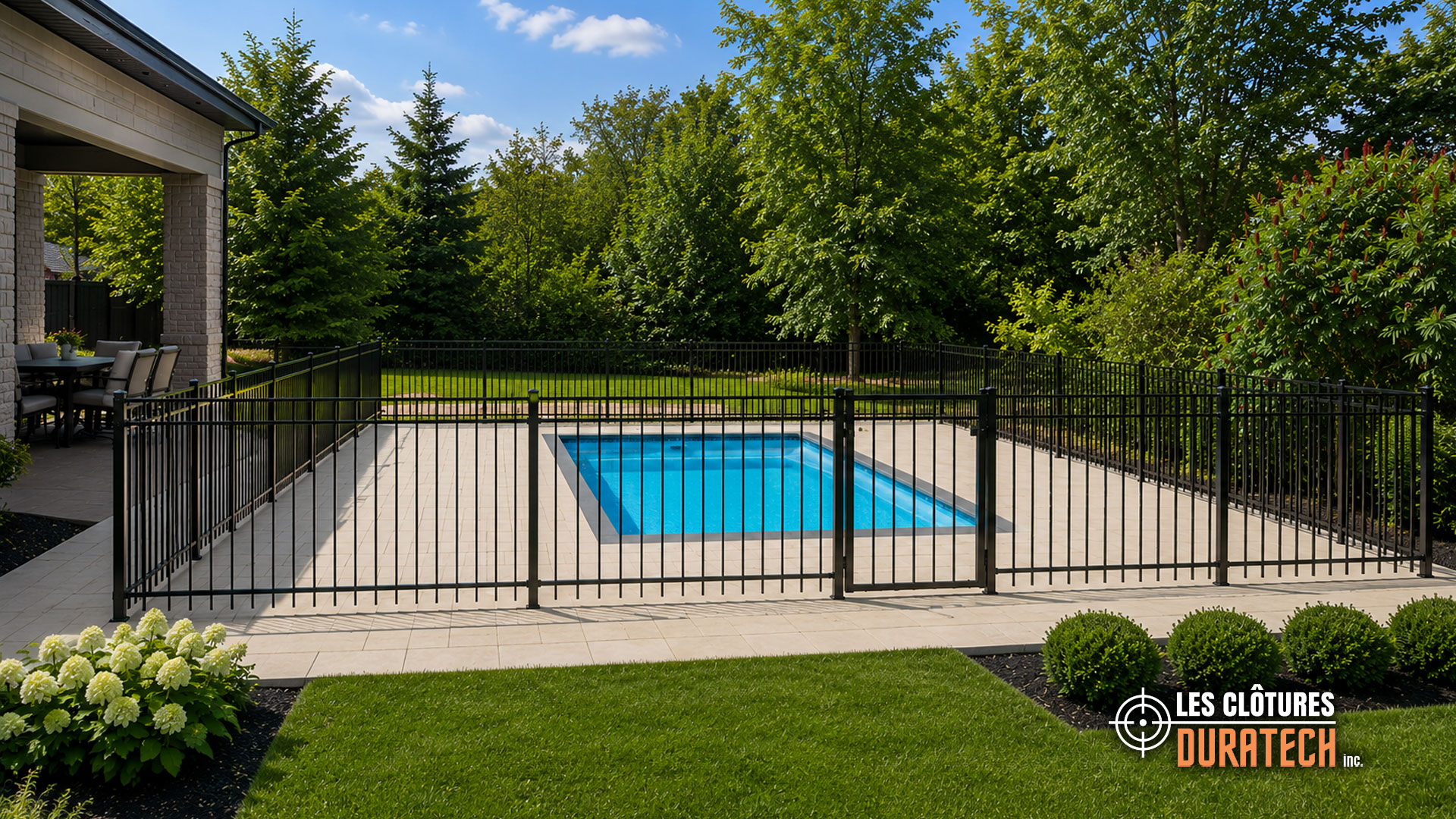
If you have an above-ground, semi-inground, or inground pool capable of holding 60 cm of water or more, the enclosure must meet these strict standards:
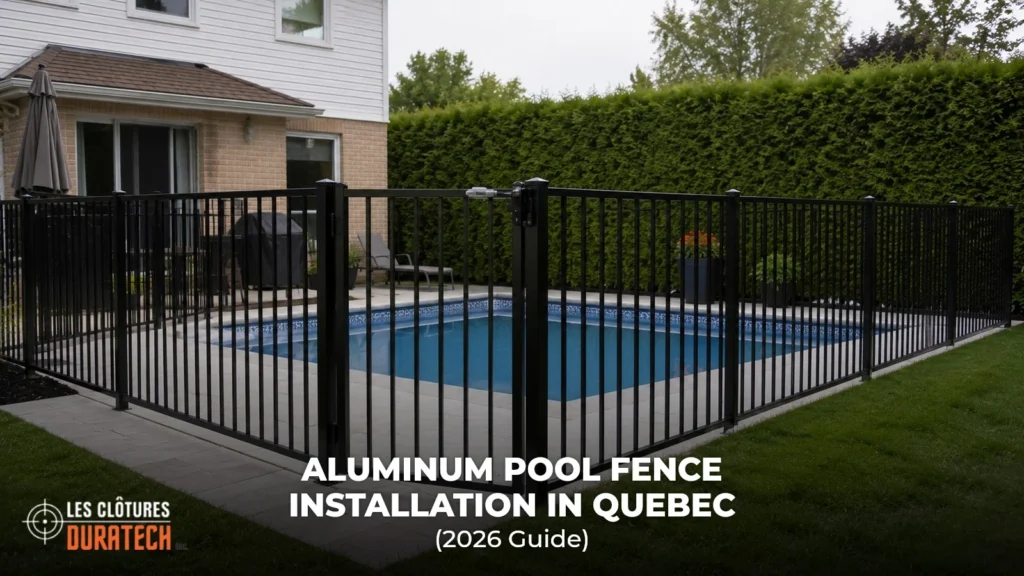
- Height: At least 1.2 meters (4 feet) high from the outside finished grade.
- Non-Climbable Design: Openings must prevent the passage of a 10 cm sphere, and there can be no horizontal footholds or nearby climbable elements (like pool pumps or trees).
Gate Safety Details
Gates are the most frequent cause of compliance failures. Even if your fence meets the 1.2 m height requirement, the enclosure will fail inspection if:
- Many compliant pool enclosures are designed with outward-swinging gates to reduce risk and improve safety
- The latch is too low or easily accessible by children.
- The self-closing hinges or magnetic latches malfunction or fail to automatically lock from a standstill.
- The gap under the gate or fence frame is too large (allowing a toddler or small pet to squeeze underneath).
Height Compliance Meets Quebec Winters (Frost Heave)
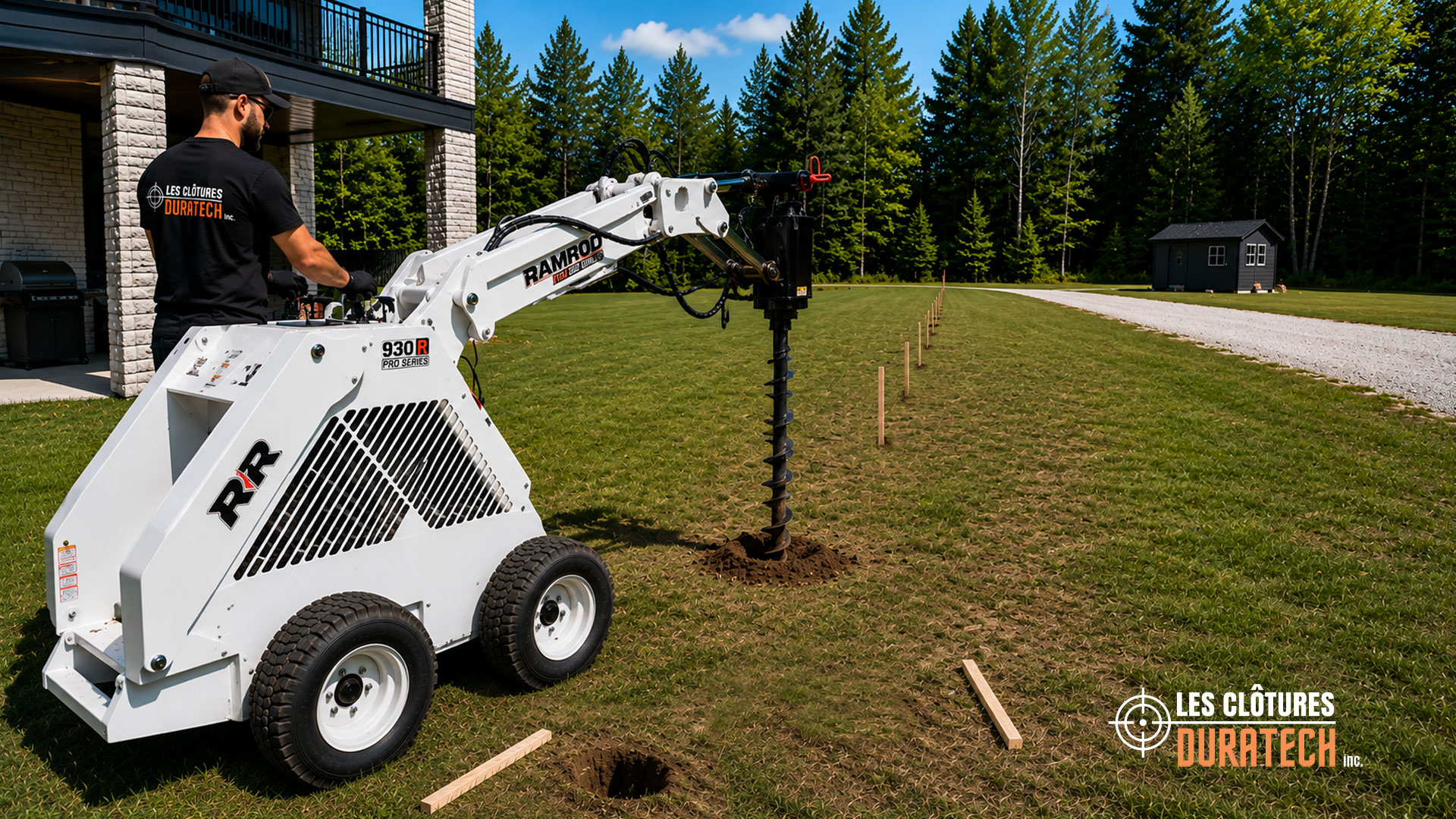
Meeting the municipal height bylaw is only half the battle; keeping the fence at that exact height is the other. In Quebec, our clay-rich soils freeze, expand, and push shallow posts upward – a phenomenon known as frost heave. A fence might be legally permitted on Day 1, but if it is installed improperly, the winter ice will push the posts up, making it non-compliant, wavy, and structurally unsound within a few seasons.
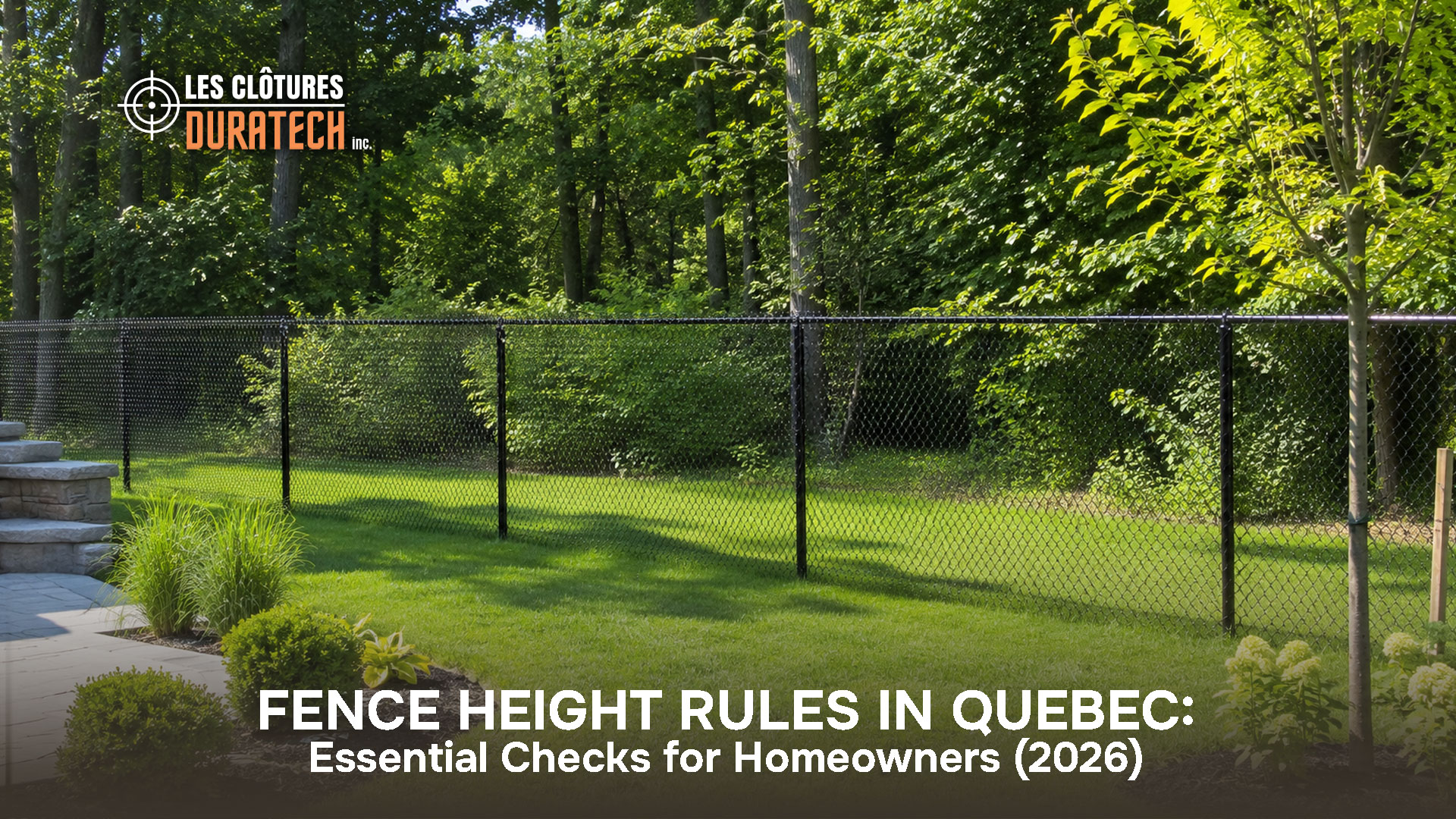
This is especially relevant for black Frost fence projects (the durable, vinyl-coated chain-link fences standard in residential backyards). If the posts heave, the entire fence line loses tension.
The Duratech Installation Difference
We don't just build to the legal height; we build to survive the climate.
- Deep Drilling: We drill deep below the frost line to anchor the posts securely.
- The 14-Day Cure: We allow 14 full days for the concrete footings to cure completely before stretching the fence wire. If a contractor stretches heavy wire mesh on soft, fresh concrete, the tension guarantees your posts will lean. We wait 14 days so the foundation never shifts.
- Info-Excavation: We handle 100% of the public utility locates (Info-Excavation) before we ever drill a hole, ensuring safety. We handle public utility locates through Info-Excavation before we ever drill a hole.
- Custom Pet Fitting: Focusing solely on the top of the fence overlooks the bottom. A significant gap beneath the mesh creates an easy escape route for dogs. Because Duratech visits your site in person, we evaluate the slope of your yard and custom-contour the bottom of the mesh directly to the ground line.
2 Real South Shore Cases by Duratech
Case 1: The Corner Lot Compromise in Chambly
A homeowner desired a 6-foot backyard Frost fence for privacy and dog security. The height was permissible in the rear yard, but the property was a corner lot. The section returning toward the street triggered the municipality's visibility triangle bylaw. We adjusted the layout, dropping the fence height near the street to maintain legal sightlines, while keeping the 6-foot height in the main backyard. The result was a legal installation, a happy inspector, and a secure yard.
Case 2: The Pool Upgrade in Montérégie
A South Shore family needed to upgrade an older pool fence before the 2027 deadline. Their existing enclosure was too short, highly climbable, and the gate hardware was non-compliant. We redesigned the enclosure using a 4-foot black Frost fence equipped with a self-closing, self-latching gate. We deep-set the posts to survive the frost, resulting in a perfectly compliant, child-safe pool area.
FAQ
1. What is the legal height for a residential fence in Quebec?
It varies strictly by municipality and the specific zoning of your lot (front yard vs. backyard). Always verify the local bylaw with your urban planning department before installation.
2. Can I build a 6-foot fence in my backyard?
Usually, yes. Most South Shore municipalities allow 1.8 m to 2.0 m (approx. 6 feet) in rear yards, but site-specific restrictions (like corner lots or utility easements) may still apply.
3. Do older pool fences really need to meet the new rules?
Yes. There is no "grandfather clause." In Quebec, all residential pools, regardless of when they were built, must comply with current safety enclosure rules by September 30, 2027.
4. Why does Duratech wait 14 days before finishing the fence?
If you pull heavy tension on fresh concrete, the posts will lean permanently. We wait 14 days for the concrete to reach maximum strength to guarantee your fence remains perfectly straight.
5. Who is responsible for city permits and Info-Excavation?
Info-Excavation is 100% handled by Duratech before any work begins. However, City Permits must be obtained by the client. We will gladly point you to the right steps and provide the technical details you need for your municipal application.
Disclaimer: This article is for general informational purposes only and does not constitute a municipal compliance review, engineering opinion, or legal advice. Fence height limits and pool safety requirements vary by municipality on the South Shore. Homeowners are strictly responsible for confirming property lines (via a Certificate of Location) and securing applicable permits with their local urban planning department before installation begins.
Ready to Ensure Your Fence is Legal and Built to Last?
Free On-Site Consultation: Les Clôtures Duratech
Before installing a fence, you must verify its height, placement, pool compliance, and frost-resistant construction on site. Don't risk municipal fines or a crooked fence. Les Clôtures Duratech provides transparent on-site evaluations, deep-drilled installations, and designs adapted to both Quebec bylaws and your specific ground conditions.
- Phone: (438) 830-3436
- Email: lescloturesduratech@gmail.com
Book your free on-site consultation today for a clear, compliant plan before work begins!