

6 things you’ll learn
- A wood fence often fails at the soil line, where fungi find moisture, air and wood to feed on.
- Cut ends on treated wood need at least two coats of preservative; posts in the ground should carry a ground-contact label.
- Treated offcuts never go in a fire, a compost bin or a mulch pile.
- Chambly requires wood fences to be painted or stained.
- What 100 ft of 6-ft fence costs in lumber alone in 2026: about $1,695 treated, $2,616 with cedar boards (shelf prices before tax).
- Why we set wood fences on steel posts, and how long the boards last on them.
In this article (contents)
- Where a Wood Fence Dies: At the Soil Line
- Three Ways to Build a Wood Fence
- Which One Fits Which Yard
- Cedar: Good Above Ground, Less Certain in It
- Pressure-Treated Wood: Read the Tag, Treat the Cuts
- Offcuts and Old Boards: What Never to Do
- Steel Posts for a Wood Fence: How We Build It
- Chambly and Longueuil: Same Wood, Different Bylaws
- What a Wood Fence Costs in Quebec
- 2 Real Cases
- Frequently Asked Questions
You want a wood privacy fence because it looks warm and keeps the neighbours’ eyes off your patio. But the part that decides how long it lasts is one you never look at: the post, right where it enters the soil. That’s where traditional wood fences usually rot.
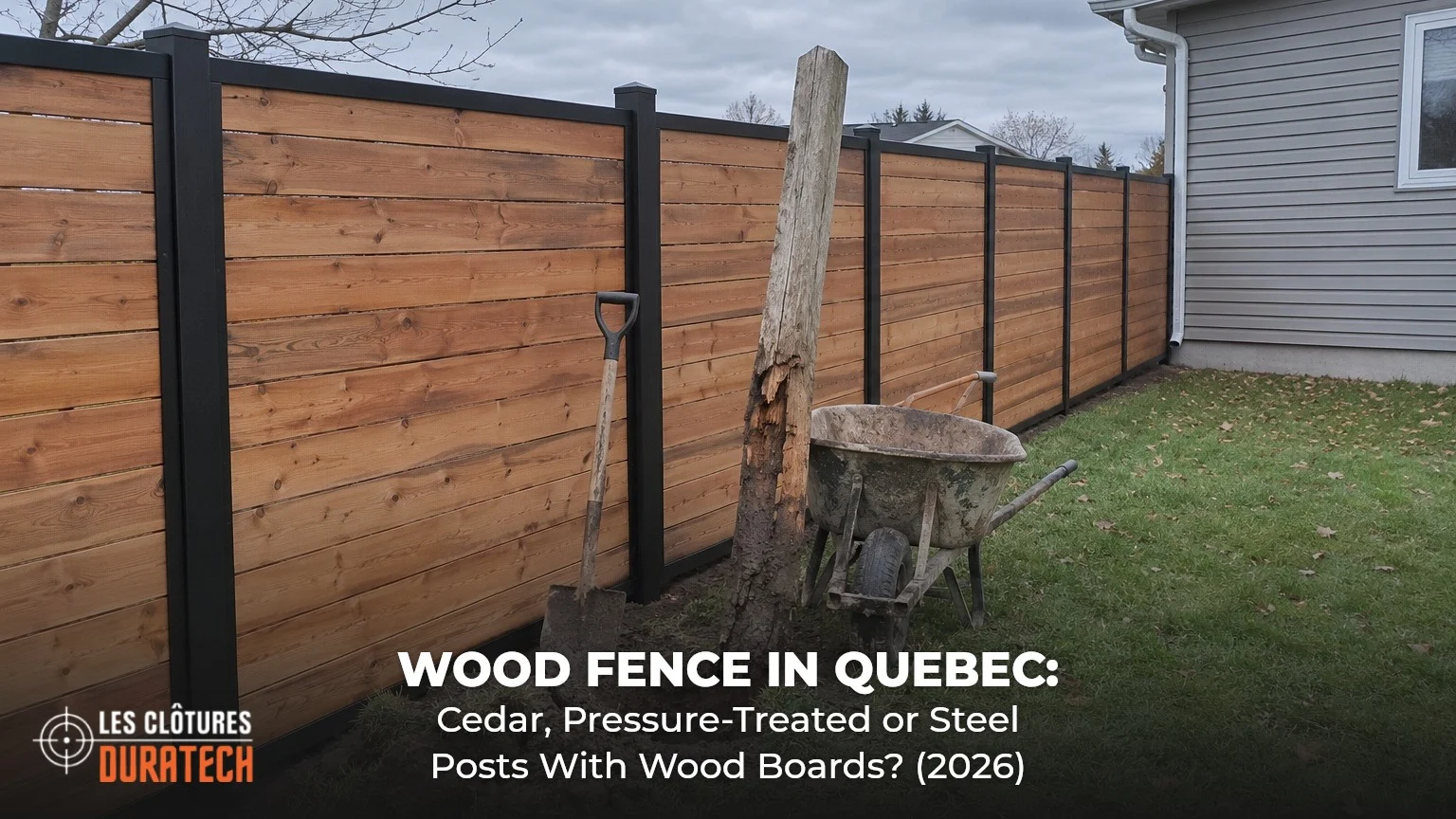
So here’s our advice in one line: put cedar or treated boards where you can see them, and give the posts the job wood does worst. That means posts rated for ground contact, or, the way we build it, steel.
Where a Wood Fence Dies: At the Soil Line
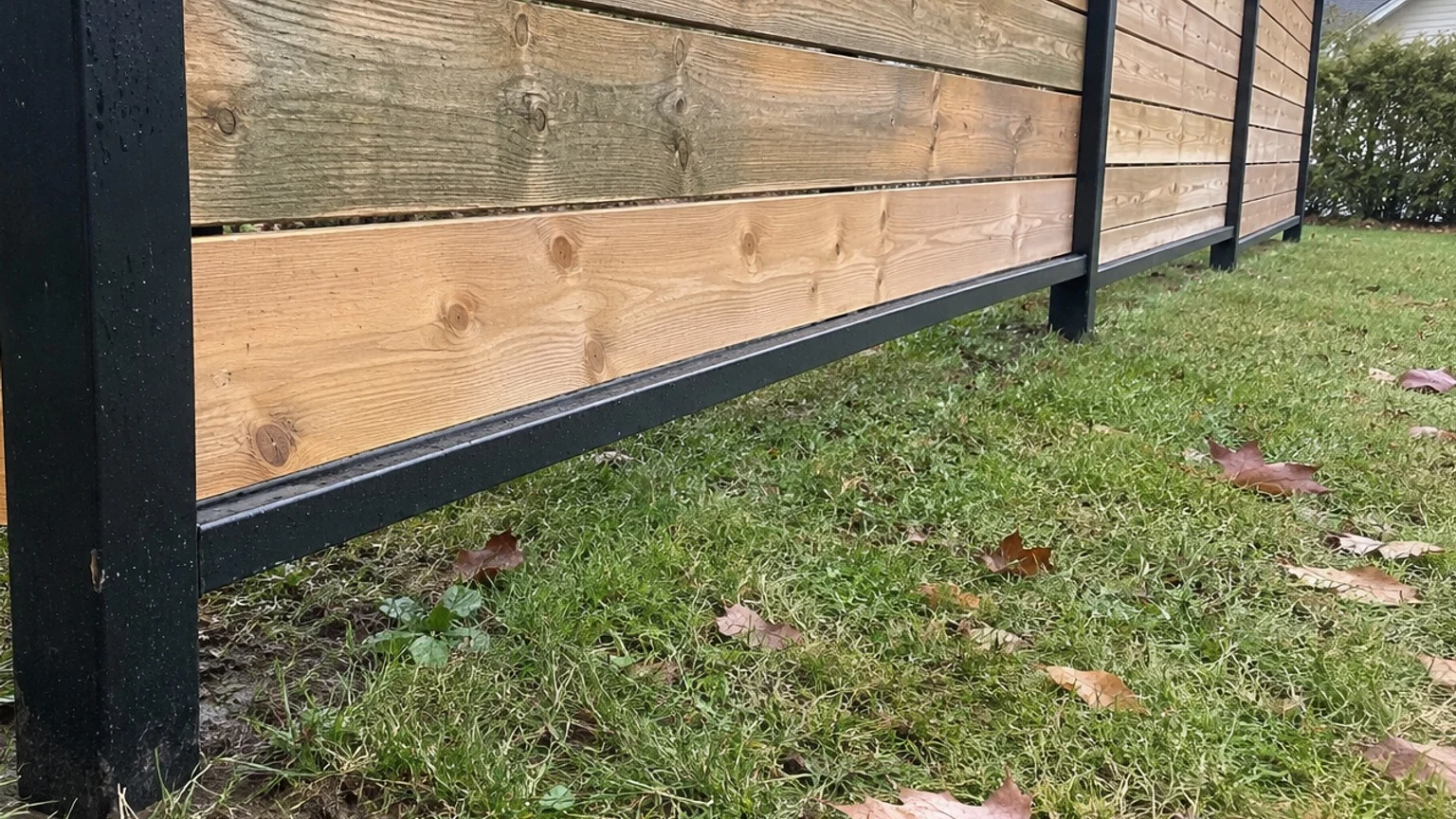
Most wood fences don’t give out at the boards; they give out at the post, right at grade.
What the sources say
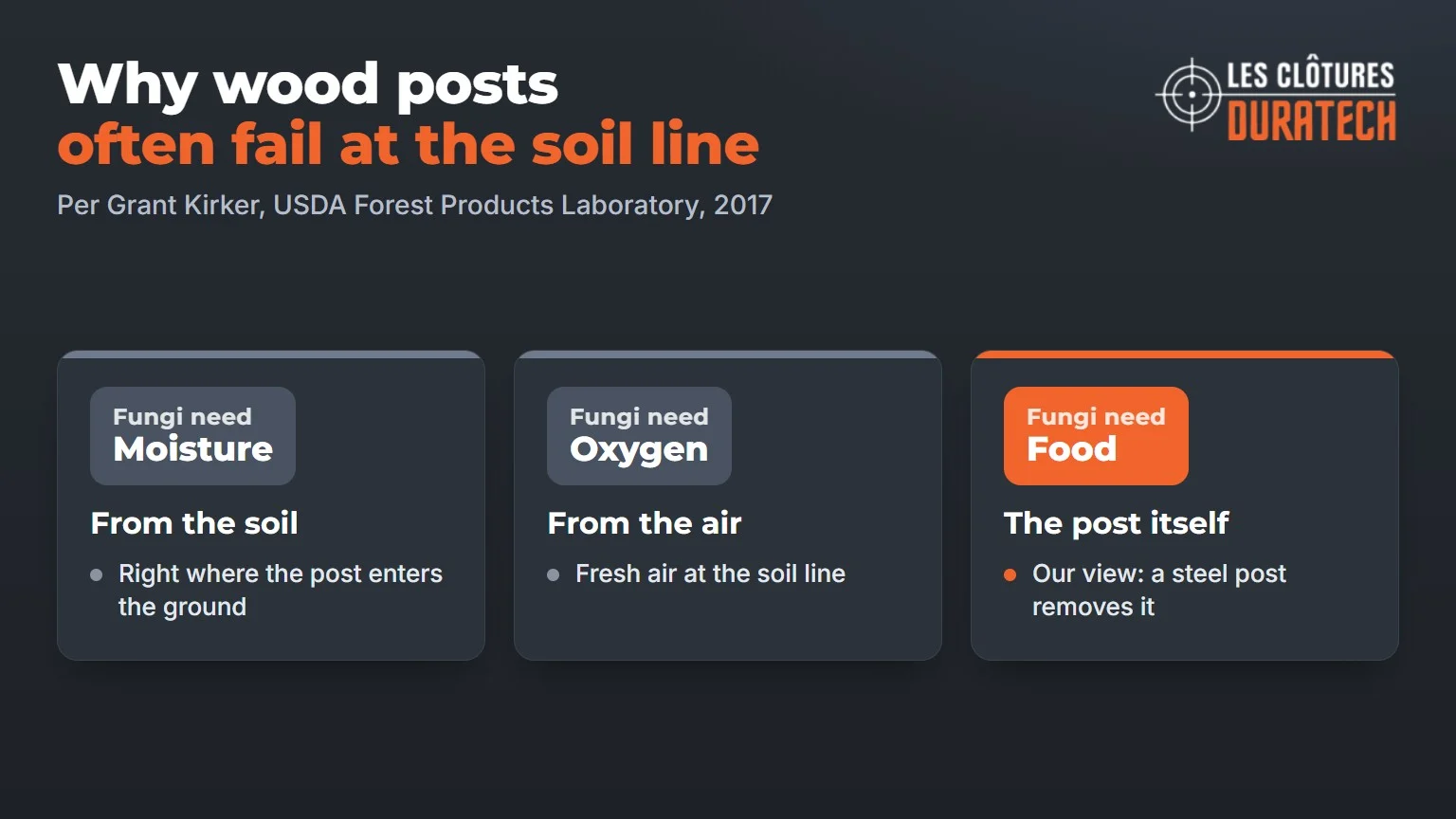
What a USDA expert says. Grant Kirker of the USDA Forest Products Laboratory wrote in 2017 on the building-trade site JLC Online that posts rot and break off at ground level because decay conditions are best there and mechanical stress is highest. Fungi find moisture in the soil, oxygen in the air and food in the post itself.
On concrete. The same piece cites an unnamed European study that rated concrete fill above gravel and dirt for longevity. Kirker adds that proper pressure treatment is the key, and that the concrete should rise above grade with its top sloped away from the post to shed water.
A steel post takes the food out of that equation. Take the wood out of the ground and the fence lives significantly longer; that is why we build on steel.
Three Ways to Build a Wood Fence
Here is how the three builds compare, from the ground up.
| Cedar on wood posts | Pressure-treated wood | Steel posts with wood boards (our hybrid) | |
| In the ground | Cedar posts | Treated posts; the label should say ground contact | Steel posts set in concrete |
| Upkeep | Finish wears out; no set schedule | Stain every 3 to 5 years | Boards need occasional staining |
| Watch for | Heartwood durability varies; the USDA handbook urges caution in ground contact | Warping and cracking; cut ends need coats | Boards still age; panels go up about 14 days after the posts, once the concrete is hard; the coating at the soil line matters |
| Price | About double treated wood | $20–70 per ft installed | Quoted after a site visit |
Both price markers are ballparks from Quebec price guides, not quotes.
Which One Fits Which Yard
These are starting points; slope, soil, access and your bylaw can change the answer.
- Lowest material cost: pressure-treated boards and rails on posts labelled for ground contact. It’s the cheapest build we priced below; the staining is up to you.
- You want cedar: use it for the boards and keep it out of the soil, on ground-contact treated posts or on steel.
- Your last posts rotted, or you don’t want wood in the ground: steel posts with wood boards, reinforced for a windy yard or a long run.
- No staining at all: none of these three. Our composite fencing cost guide covers the option that needs no staining, at a higher upfront cost.
Cedar: Good Above Ground, Less Certain in It
Cedar earns its place in the boards; the open question is the post.
What the sources say
What the handbook says. The USDA Wood Handbook (2010) puts western redcedar and northern white-cedar in its “resistant” class (Table 14-1). Heartwood in that class generally gives satisfactory service above ground; the “very resistant” class is the one that generally performs in ground contact. A footnote warns that resistance may be lower in the ground and varies widely within most species, and it urges caution in ground-contact and structural uses.
What Kirker adds. Natural durability in species such as eastern white cedar depends on extractives in the heartwood, which vary. Preservative treatment is a more controlled process, with more predictable results, especially in soil contact.
So we use cedar where it’s strongest, in the boards, and keep it out of the soil.
Pressure-Treated Wood: Read the Tag, Treat the Cuts
What’s in it. Health Canada says wood for home projects may be treated with ACQ or CA-B, both copper-based, and that CCA is no longer available for residential construction.
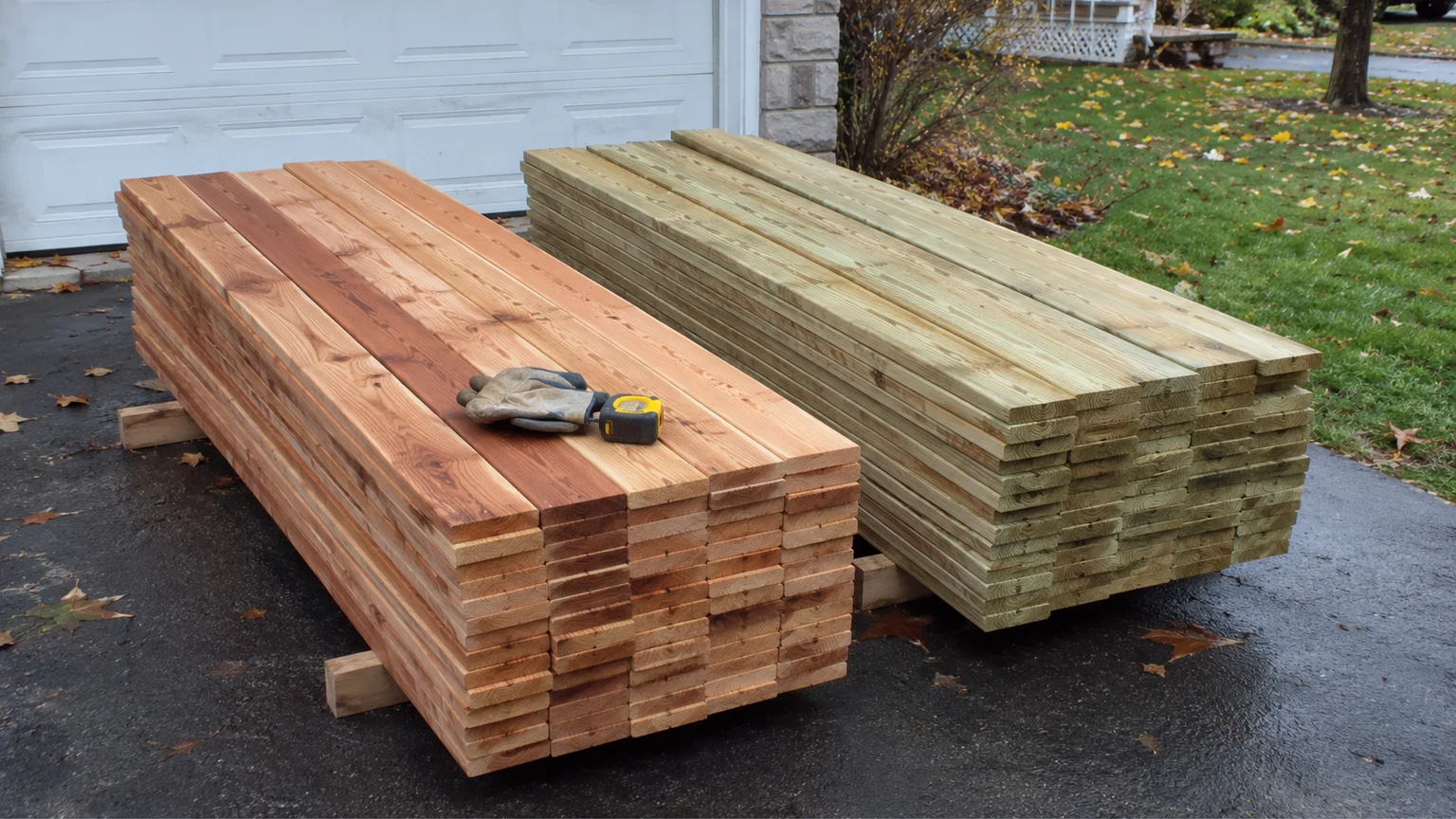
Ground contact is a separate rating. Look for “ground contact” on the tag, not “above ground”. When we checked a big-box store on 2 November 2026, the pressure-treated 1×6 boards and 2×4 rails said “Above Ground Use Only”; only the 4×4 posts said “Suitable for Ground Contact”.
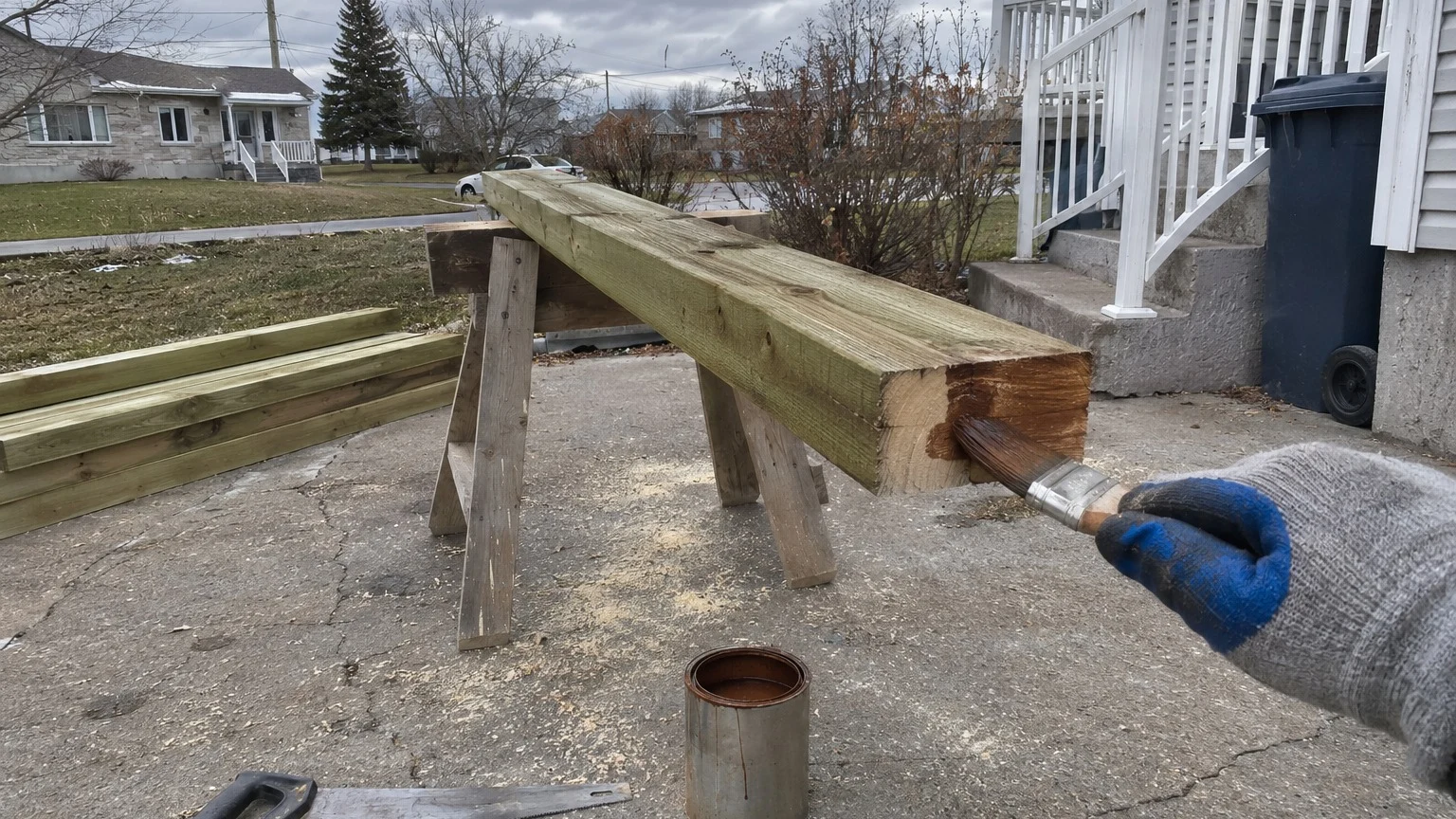
Cut ends. Every cut or drilled surface exposes wood the treatment may not have reached. Wood Preservation Canada’s guide to field treating quotes the CSA O80 standard: after cutting or drilling, apply a field-treatment preservative, following its label, in at least two coats. Without it, the treated product “might not provide the intended service life”.
Which product. The guide names copper naphthenate: at least 2% copper for wood that goes in the ground, 1% for wood above it. It goes on with a brush, on every post cut to height and every board cut to length. On the site visit, ask us how the cut ends on your fence get treated, and with what.
Fasteners. The copper in the treatment corrodes ordinary steel, so treated wood needs better fasteners. Stainless steel is the safest pick, and galvanized fasteners are an accepted option. For screws, ceramic-coated treated-wood screws also work; keep the other hardware stainless or at least galvanized.
If you buy the lumber yourself, ask its manufacturer which fasteners they recommend.
Offcuts and Old Boards: What Never to Do
Health Canada’s page on treated wood is clear. Never burn treated wood, indoors or outdoors, because burning releases chemicals into the ash and smoke. Don’t put treated wood or its sawdust in a compost bin, and don’t use it as mulch. Dispose of waste according to the manufacturer’s guidelines and local and provincial regulations.
Call your ecocentre or municipality before you load the truck. If you are tearing out a treated fence built before 2004, it is likely CCA-treated, and Health Canada gives separate handling advice for those.
Steel Posts for a Wood Fence: How We Build It
Our steel-frame hybrid fence with wood boards puts steel where wood used to be in the ground. The frame is black steel with corrosion-resistant protection; some configurations use silver galvanized posts.
The standard build uses 2½” × 2½” posts and two rails. For wind-exposed yards or long runs we offer a reinforced build with 3″ × 3″ posts and four rails. The infill is treated wood or cedar boards, horizontal or vertical.
Before we drill, we take care of the Info-Excavation request. At Duratech, post holes go below the frost line to resist frost heave in South Shore clay. We pour concrete, let it cure for about 14 days, then install the panels. Fourteen days is our standard, not a code figure; solid panels catch more wind than chain link, so the foundation must be rock-hard before they go up.
Slopes call for longer posts or concrete sonotubes. Final assembly usually takes one to three days.
The boards are still wood, so plan on occasional staining; that’s the trade-off for a lower price than composite. Wood boards in our hybrid fences typically last 10 to 20 years, depending on type and finish (more in our fence lifespan guide). We price this build after a site visit: post count, slope and access drive the number.
Steel has one spot to watch too: the coating where the post meets the ground and where water sits. On the site visit, ask us to show you how the post is protected at that line and where the water will drain on your lot.
Posts already soft, or want a wood fence with no wood in the ground? Request a fence quote: we check the posts and the slope on site and give you a written estimate.
Chambly and Longueuil: Same Wood, Different Bylaws
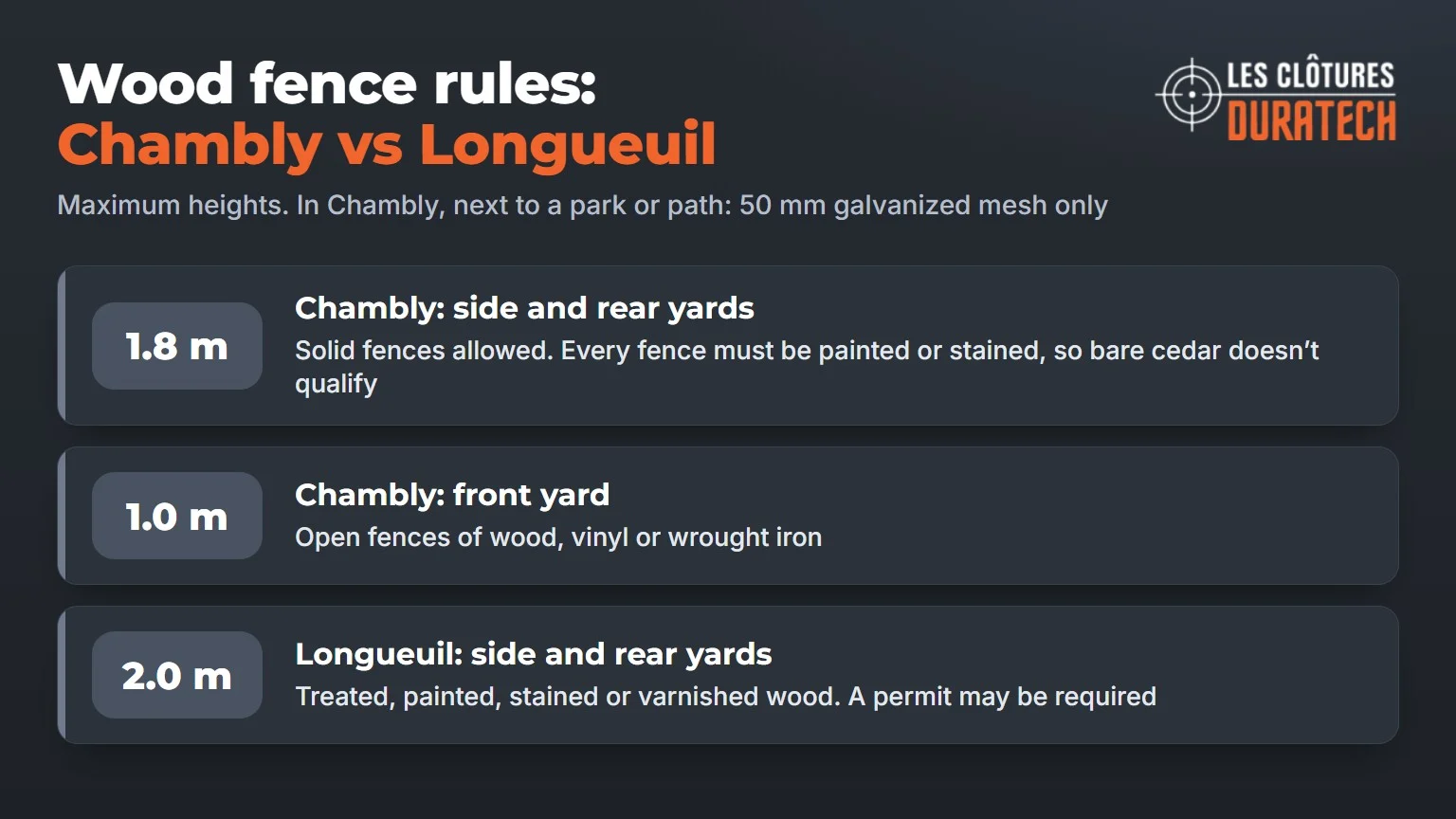
Quebec has no single fence bylaw; each South Shore city writes its own. In Chambly, zoning bylaw 2020-1431 (amended up to 2 June 2026; check chambly.ca for later changes before you buy) says:
- Side and rear yards: fences up to 1.8 m, solid ones included.
- Front yard: open fences of wood, vinyl or wrought iron, up to 1 m.
- Every fence must be painted or stained, so bare cedar doesn’t qualify.
- On a lot next to a public park or pedestrian path, any fence must be 50 mm galvanized wire mesh.
The bylaw leaves three things open: other front-yard materials, whether a clear finish counts, and how far the park-and-path rule reaches on your lot. Confirm those with the city before you order wood.
In Longueuil, the city’s page on fences and low walls (last updated October 2017, so check for changes) allows fences in side and rear yards, up to 2.0 m from the adjacent ground; a permit is required depending on the situation. Allowed materials: natural wood for pole fences, and treated, painted, stained or varnished wood. Untreated cedar boards aren’t mentioned either way.
Heights, setbacks and corner lots are covered in our guide to fence height rules in Quebec.
What a Wood Fence Costs in Quebec
What the sources say
What price guides say. Quebec renovation price guides (one updated 28 August 2026) put installed wood at $20 to $70 per linear foot, or $2,000 to $7,000 for 100 ft of treated wood. Gates, excavation on difficult ground and removal of an old fence are billed on top. Red cedar runs roughly double the price of regular treated wood.
To show where that money goes, we priced the lumber alone for a typical job: 100 ft of 6-ft fence, straight, no gate or corner, on shelf prices from 2 November 2026.
| Boards, rails and posts | Per foot | |
| Pressure-treated, big-box store | $1,695.27 | about $17 |
| Cedar boards on treated rails and posts, big-box store | $2,616.26 | about $26 |
| All western red cedar, Quebec lumber retailer | $4,090.65 | about $41 |
That’s lumber only: no concrete, fasteners, finish, waste or labour, so it doesn’t compare with the installed range above. Big-box prices are before tax; the lumber retailer’s listings don’t say. The two shops’ cedar may also differ in species, grade and board size.
How we counted. Boards: 223, set vertically with no gaps; we assumed each is 5.4 in. wide, since a 1×6 is narrower than 6 in. Rails: 39, three 2×4×8 per section. Posts: 14 of 4×4×12, about 8 ft apart, across 13 sections.
Why 12-ft posts. A retailer’s foundation guide calls for holes 3′ 6″ to 4′ deep. That’s shop advice, not a code depth, but it means a 6-ft fence needs at least a 10-ft post, so we priced 12 ft.
Unit prices. At the big-box store in Anjou: treated 1×6×6 boards $4.75, cedar 1×6×6 boards $8.88, 2×4×8 rails $7.70, 4×4×12 posts $23.98. At the lumber retailer (decking category): 112 twelve-foot cedar boards at $21.49, cut in half, rails $17.69, posts $70.99. Thirteen ready-made 6 × 8 ft treated panels at $129 would cost $1,677 before posts.
Gates are extra in every total; our fence gate guide covers what keeps a wood fence gate square. Want a number for your own yard, with concrete and labour in? That’s what our site visit is for.
2 Real Cases
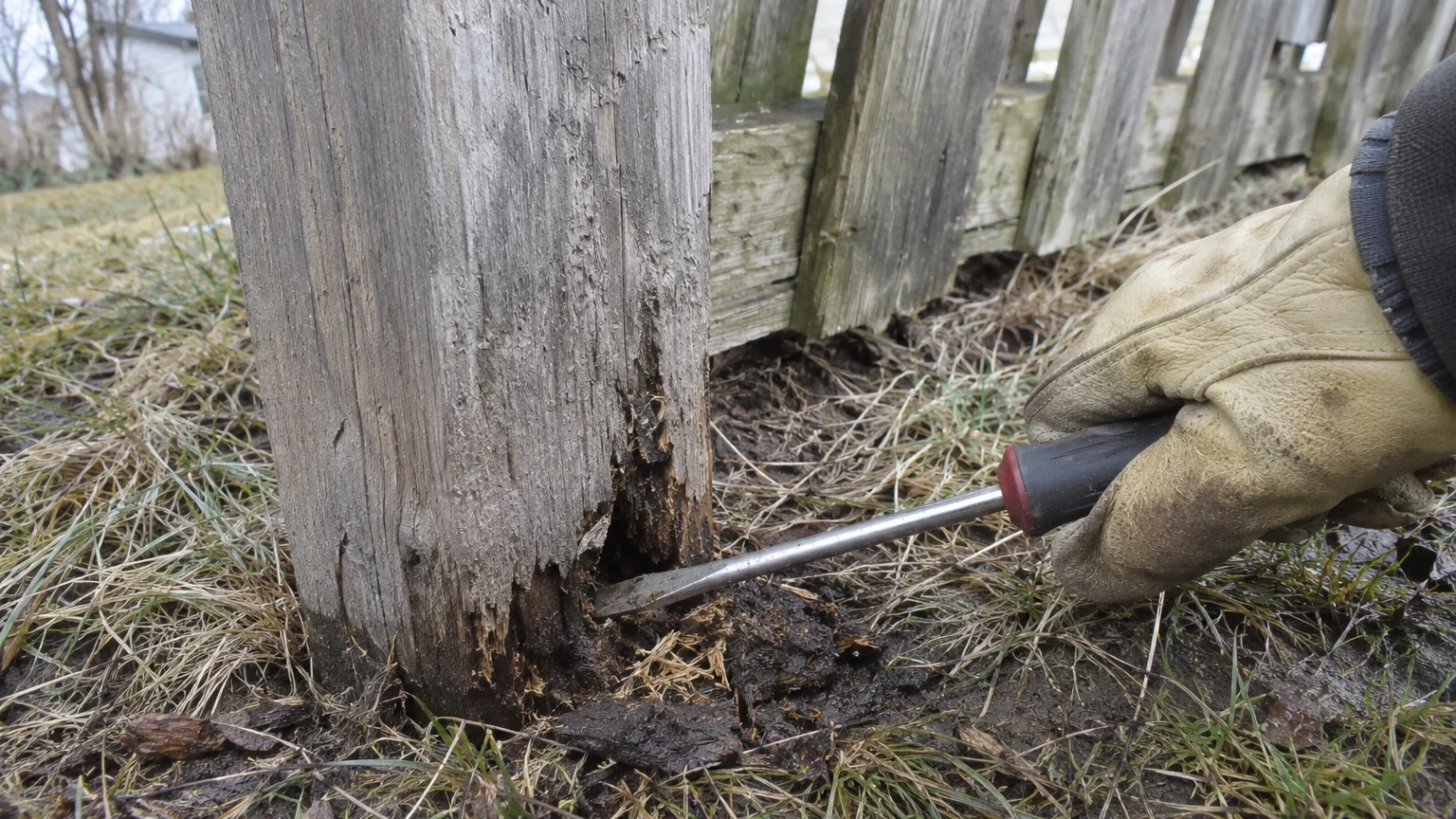
Candiac: boards fine, posts soft. A homeowner called about a cedar fence that leaned after a wet spring. The boards sounded solid, but a screwdriver pushed into a post at soil level sank in: the post was rotting at grade. The owner still wanted cedar, so we set steel posts below the frost line, let the concrete cure for 14 days and hung cedar boards on the new frame.
Chambly: a path at the back. An owner wanted a solid wood fence, 1.8 m tall, around the back and side yards. The back of the lot meets a pedestrian path, and Chambly’s bylaw says any fence on a lot next to such a path must be 50 mm galvanized wire mesh. We asked the owner to settle that with the city before ordering wood. The owner did, filed the permit request and left Info-Excavation to us. Once the city confirmed which stretch had to stay mesh, we built wood everywhere wood was allowed.
Frequently Asked Questions
1. What does wood fence installation cost in Quebec?
Quebec price guides put installed wood at $20 to $70 per linear foot (August 2026), with gates, excavation on difficult ground and old-fence removal on top. Ask for a quote that lists those separately. We quote after a visit, because slope and access change the number.
2. Do I need a permit for a wood fence?
It depends on your municipality. The owner requests the permit, and we take care of Info-Excavation. Check the height limit, front-yard rules and finish requirements with your city. If you dig yourself, submit the free Info-Excavation request first.
3. How long does a cedar or treated wood fence last?
There is no single figure: a wood fence lasts as long as its posts at the soil line, its treatment and its upkeep allow. For wood boards on a steel frame, our typical range is 10 to 20 years, depending on type and finish, installation, site and maintenance.
4. Do the boards on a hybrid fence need staining?
Yes, occasionally. The wood version costs less; the composite version needs no staining but costs more upfront.
5. How should I prepare for a quote?
Walk the line and note the slope, the gates and which sides face the street or a park. Look up your bylaw. If you have an old wood fence, push a screwdriver into each post at soil level, and photograph any that sink. Our leaning fence post guide covers repair or replacement.
Disclaimer: Prices are ballparks from third-party price guides and retailers’ shelf listings, not quotes, and the final price follows an on-site evaluation of slope, access and material costs. Fence height, setbacks and other municipal rules differ by city and change; check with your municipality, and note that the owner requests any permit. This article is general information, not engineering or legal advice.
Not sure which wood belongs on your lot, or whether your posts are already soft? Request a fence quote and we’ll come and look.
Phone: (438) 830-3436
Email: lescloturesduratech@gmail.com
Website: lescloturesduratech.com
We serve homeowners across the South Shore and Montérégie, in English and French.